
Emergency General Contractor Near Me: What North Miami Homeowners Should Do First
After a pipe bursts or a storm tears a soffit loose, most homeowners’ first instinct is to call a contractor. That’s usually the right call, made fifteen minutes too late, after the water has already reached the subfloor. In most North Miami home emergencies, calling a contractor is the third or fourth thing you should do, not the first. The decisions you make in the first half hour decide whether the damage stays contained or doubles. Here’s the ordered plan we wish more homeowners knew before the panic sets in. And if you’d rather skip the guesswork and have a professional walk you through it, call (888) 255-7411.
What Should North Miami Homeowners Do in the First 30 Minutes of a Home Emergency?

The first thirty minutes are about containment, not repair. Stop the source, protect what can still be saved, and document everything before a single board is cut. In our experience across North Miami, the homes that recover fastest aren’t the ones with the most expensive insurance policies. They’re the ones where someone stayed calm and worked the steps in order.
Here’s the sequence that holds up whether the emergency is water, wind, electricity, or a sagging ceiling:
- Make it safe. Get people and pets out of the affected area. If you smell gas, see sparking, or hear a wall cracking, leave the house and call the fire department or utility first. No contractor can help until the immediate danger is off.
- Stop the source if you can do it safely. Shut off the main water valve for a leak. Throw the breaker only if you can reach the panel without standing in water. Never touch a panel with wet hands or feet.
- Contain the spread. Towels, buckets, a tarp, sandbags at a sliding door during a storm. Move furniture and electronics off wet floors.
- Photograph everything. Wide shots, close-ups, and a timestamp on each. More on this in the documentation section below.
- Call for help. Now the contractor call makes sense, because you know what you’re dealing with and you’ve protected the evidence.
Safety comes before speed. We’ve pulled water out of a garage in North Miami where a homeowner tried to reset a tripped breaker standing in standing water. Nobody was hurt, but that’s luck, and luck runs out. Electrical faults and gas are the two emergencies where a trained professional isn’t optional.
How Do You Handle the Four Most Common North Miami Emergencies?
Most of the calls that come into a general contractor in North Miami fall into four buckets. Each one has its own first-response logic, and getting the bucket right matters more than getting it fast.
1. Water Intrusion
This is the big one in this climate. Between hurricane season and the daily afternoon thunderstorms, water finds every weak point: a failed supply line, a backed-up drain, a roof flashing that’s given up. Shut off the water, kill power to any wet outlets at the breaker (dry hands, dry floor), and get air moving. Run fans and open windows if it’s safe; mold in South Florida can start colonizing damp drywall inside 24 to 48 hours. Pull up wet rugs and get them outside. Don’t yank soggy drywall yourself; let a professional assess what’s structural and what’s cosmetic.
2. Storm Damage
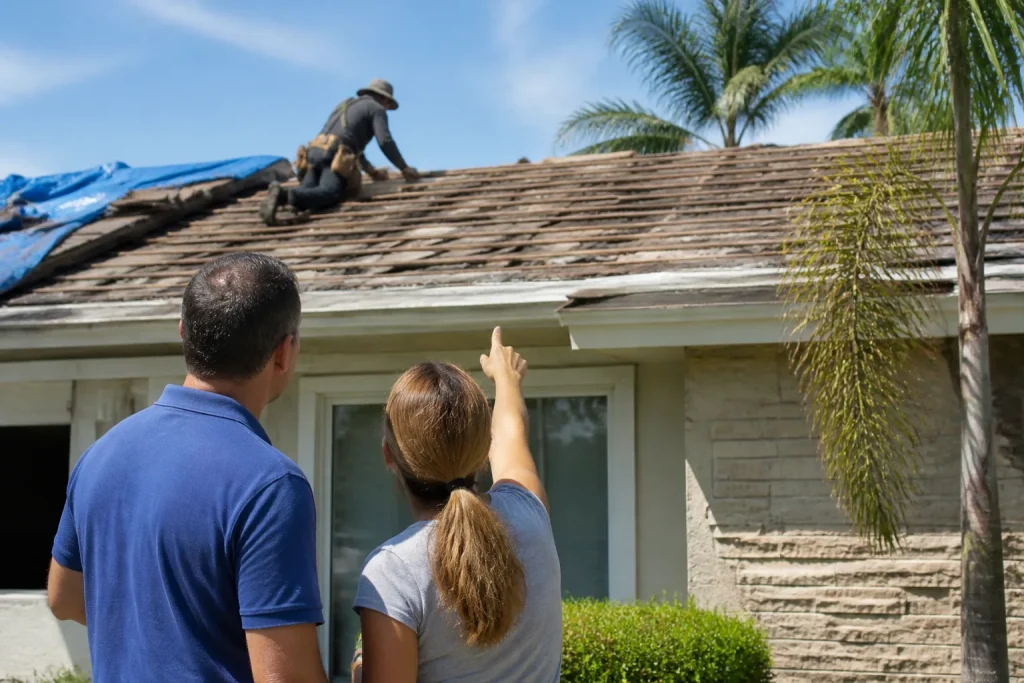
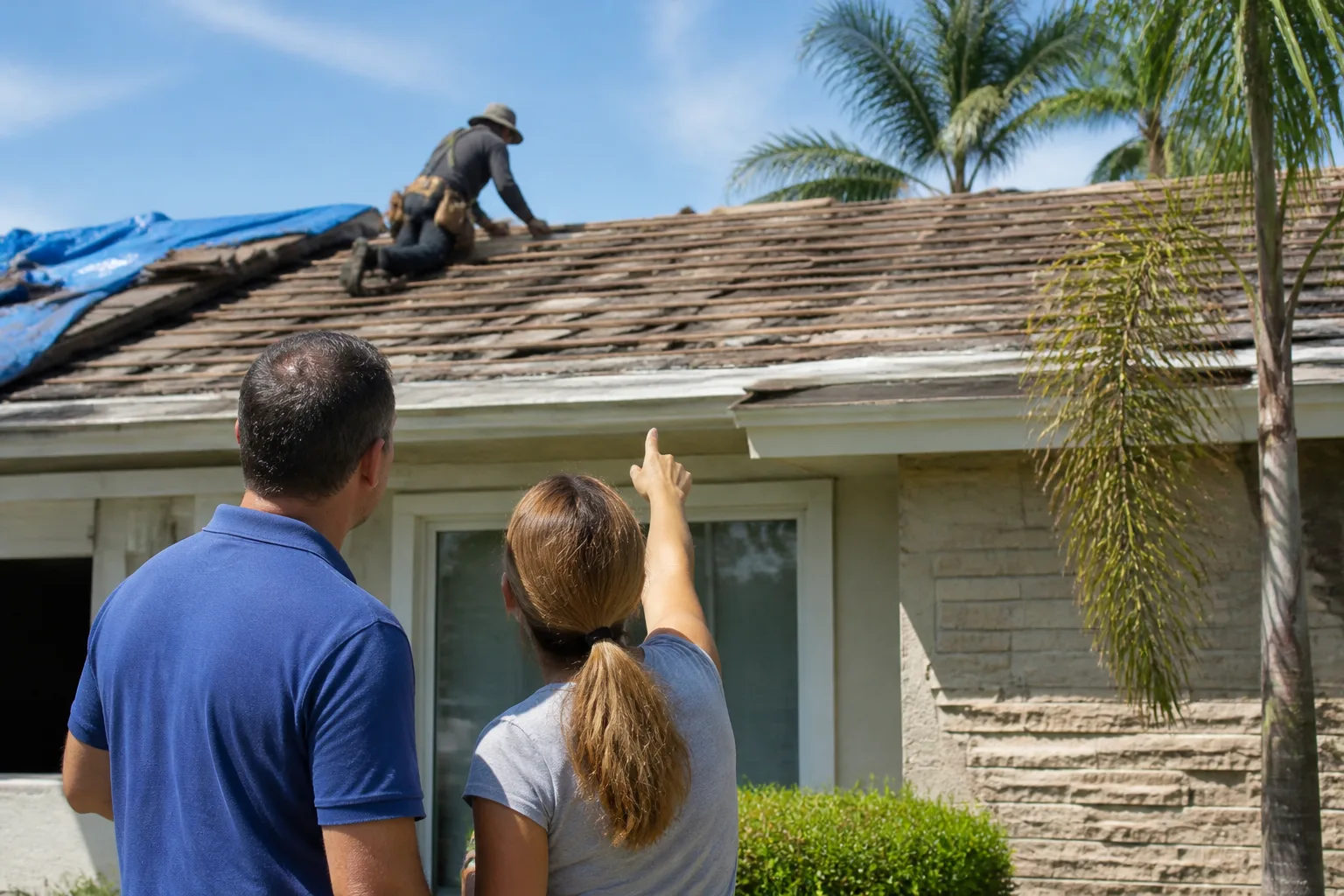
After a named storm or a strong squall line, the risk isn’t just the damage you can see. It’s the soffit hanging by one nail, the fence leaning on the power line. Keep clear of downed lines and call the utility. Tarp what you can reach from the ground. Do not climb a ladder onto a storm-damaged roof; that’s a job for a trained professional with proper fall protection. Document the damage from the ground with photos before anything moves.
3. Electrical Failure
Smoke, a burning smell, a breaker that trips the moment you reset it – these are not DIY situations. If it’s safe to reach the panel, shut the main breaker and call a licensed electrician or your utility, then a general contractor to handle the resulting repairs. Repeated breaker trips mean something is wrong behind the wall. Don’t keep flipping it back on and hoping.
4. Structural Compromise
A sagging ceiling, a crack that’s widening, a door that suddenly won’t close. Evacuate the room and, if the sag is spreading, the house. Call for a professional assessment before moving anything heavy back in. Structural issues are the one category where waiting a day to “see if it gets worse” is the wrong instinct.
What Should You Document Before Anyone Arrives?

Document more than you think you need, and do it before the first contractor sets foot inside. The documentation window closes the moment work starts, and once rip-out begins, there’s no photographing the water line or the rotten subfloor underneath. That evidence is what supports your insurance claim and what a contractor needs to scope the repair accurately.
Capture the following while the scene is still fresh:
- Wide shots of each affected room from the doorway, so the scale is clear.
- Close-ups of the actual failure – the split pipe, the cracked flashing, the water stain spreading across the ceiling.
- A photo of a clock or your phone’s on-screen date and time in the first frame, to lock the timestamp. Most phones stamp photos automatically; confirm yours does.
- Your insurance policy number and the claims line, photographed or written on paper that stays dry. Call your insurer early; most policies have a duty to report promptly.
- A quick video walkthrough narrating what you see, room by room. It’s faster than typing notes and captures details you’d otherwise forget.
- Any receipts for emergency supplies you buy – tarps, fans, dehumidifier rental. Some policies reimburse these.
We tell every North Miami homeowner the same thing: your phone is your best insurance tool in the first hour. Twenty minutes of photos saves weeks of argument later.
How Do You Tell a Legitimate Emergency Contractor from a Storm-Chaser?
Storm-chasers follow the weather. After a big system rolls through North Miami, out-of-state trucks appear with cash-only offers and a pitch about “helping out the neighborhood.” Some are legitimate. Many are not, and the ones who aren’t leave with your deposit and a phone number that stops working. The good news is that verification takes about two minutes, even mid-crisis.
Check these before you let anyone start:
- License. Florida requires contractors to be licensed, and you can verify a license number on the state’s database in a couple of minutes. Ask for the number and check it. A legitimate contractor expects the question.
- Insurance. Ask for proof of general liability and workers’ comp. If a worker gets hurt on your property and the contractor isn’t covered, that’s your problem. You’re allowed to ask.
- Written price up front. A real contractor puts a number in writing before work starts. A storm-chaser gives you a verbal ballpark and “we’ll settle up after.” That’s the tell.
- Local presence you can verify. A physical address, a working phone that a real person answers, and a guarantee you can read. A number that only goes to voicemail in a crisis is not a contractor; it’s a lead generator.
- No pressure tactics. “Sign tonight or the price doubles” is a red flag, not a deal.
If someone can’t produce a license and a written scope on request, walk away. There will be another contractor, and you’ll still have your money.
What Should You Ask Before Authorizing Any Emergency Work?

Authorization is the moment you hand over control of your home and your wallet. Asking the right questions before that moment protects you more than any handshake. In our experience, homeowners who ask these four questions end up with clearer scopes, fewer change orders, and far less stress.
- “What exactly are you doing, and what are you not doing?” Get the scope in writing. Emergency work is fuzzy by nature, so the boundaries matter more, not less. “Dry out and stabilize” is a very different job from “rebuild.”
- “What’s the price for this phase, in writing?” Emergency work often happens in phases: stop the damage now, plan the repair later. Get a written price for the first phase before a tool comes out of the truck.
- “Who’s coordinating with my insurance?” Some contractors document and coordinate with your adjuster; some hand you a receipt and leave. Know which you’re getting before you sign.
- “What’s the guarantee, and what’s covered?” This is where a written guarantee earns its keep.
That last one deserves its own note. In emergency work, scope is fuzzy and the pressure to just get it done is high, which is exactly when a written guarantee matters most. Our 365-Day Done Right Promise means if the work fails inside the guarantee period, we come back and fix it at no charge, and if a repair fails we return for a free second visit with no re-inspection fee. Every project also gets a written price before any work starts, so the number on day one is the number on the invoice. That’s the standard we work to, and it’s the standard you should demand of any contractor you call, in a crisis or not.
When Should You Call a Pro Instead of Handling It Yourself?
Call a professional the moment the job touches water behind a wall, electricity, gas, or anything structural. Those four areas are where a homeowner’s do-it-yourself fix can turn a contained problem into a dangerous one. If the water has reached the subfloor, if a breaker won’t stay reset, if a ceiling is sagging, or if a wall is cracking, stop and call. A trained professional has the tools and the experience to assess it safely, and our technicians have up to 22 years of experience reading exactly these situations. For everything we do, from emergency repairs through the finished project, you can start at our Penhallow Remodeling North Miami home page and see how a job runs from first call to final walkthrough.
A storm can also push a planned job into emergency territory. A slow roof leak that finally lets go, or a burst supply line under a kitchen sink, can mean a repair turns into a remodel. When that happens, our General Contractor in North Miami team scopes the damage, gives you a written price, and pulls the permits the City of North Miami requires for structural and water-damage rebuilds, so the work passes inspection instead of getting red-tagged. If the water damage reaches the kitchen, the rebuild may open the door to Kitchen Remodeling in North Miami with cabinets from lines like KraftMaid or Wellborn and fixtures from Moen or Delta. If it found a bathroom, we cover that at Bathroom Remodeling in North Miami.
The Bottom Line
In a North Miami home emergency, the first thirty minutes decide how much you save and how much you lose. Stop the source, stay out of danger, photograph everything, and only then call a contractor. Verify the license, get the scope and the price in writing, and hold out for a guarantee you can read. The right contractor in a crisis is the one who answers the phone with a real person, shows up in the window they gave, and stands behind the work afterward, which is the standard every job we take on operates under.
If you’re in North Miami and need help, Penhallow Remodeling North Miami offers free estimates – call (888) 255-7411. A live person answers around the clock, and we’ll walk you through what to do next before anyone picks up a tool.
Frequently Asked Questions
Emergency repair costs in North Miami vary widely by damage type, but you should always get a written price before work starts. As rough ranges, stopping an active water leak and drying out a room often runs several hundred to a couple thousand dollars depending on square footage, while structural or water-damage rebuilds that require permits climb higher based on scope. The number that matters is the one in writing for your specific job. Call (888) 255-7411 for an exact quote – estimates are free.
It shouldn’t, and with us it doesn’t – the number on day one is the number on the invoice. In emergency work, ask for a written scope for the first phase (stabilize and dry out) and a separate written price for the rebuild. Any legitimate change to the scope gets put in writing and agreed before it happens, never sprung at the door. Call (888) 255-7411 and we’ll put the price in writing before any work begins.
Yes. Structural and water-damage rebuilds in the City of North Miami generally require permits, and we pull them and see the inspections through, so the work passes instead of getting flagged later. A contractor who tells you permits aren’t needed on a structural repair is one to avoid. Call (888) 255-7411 to talk through what your job requires.
Stabilizing the damage (stopping the leak, drying out, tarping a roof) is often done the same day you call. The full rebuild afterward depends on scope, materials, and permitting, and can run from a few days to several weeks. We give you a written timeline with the written price so you know what to expect. Call (888) 255-7411 for a free estimate and a clear schedule.
Written by the team at Penhallow Remodeling North Miami.
Need Construction Help?
Call Penhallow Remodeling North Miami - licensed & insured, here with fast after-hours help in North Miami.
(888) 255-7411