
ActiveYards General Contractor in North Miami: A Homeowner’s Guide
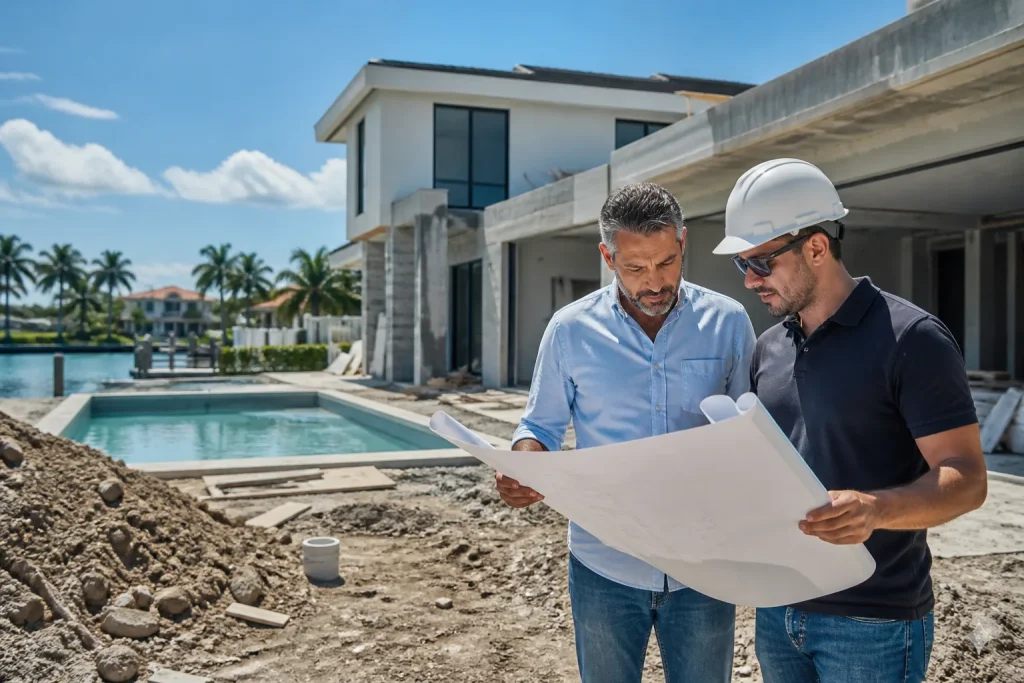
ActiveYards makes aluminum fencing that looks clean and lasts decades. But in North Miami’s sandy, salt-exposed soil, a contractor who doesn’t adjust footing depth and concrete mix for local conditions will have that fence leaning before the warranty period ends. We’ve walked properties off Northeast 123rd Street where a two-year-old aluminum run had already begun to cant toward the canal, not because the panels failed, but because the footings were poured to a spec written for Ohio. This guide shows you how to check both the product and the installer before anyone digs.
If you’d rather not wade through permit databases and soil notes yourself, call (888) 255-7411 and we’ll talk through what your particular lot needs.
Why North Miami Soil Changes ActiveYards Installation

North Miami sits on a coastal ridge of high-sand fill over oolitic limestone, and near Biscayne Bay the water table can rise to within a couple of feet of the surface during the wet season. That matters because aluminum fence posts are only as stable as the concrete collar holding them, and a standard footing spec does not survive here.
What a contractor working in North Miami should actually account for:
- Sandy, low-cohesion soil: Posts need deeper, wider footings than inland specs call for so the concrete has enough bearing surface. A 400mm hole that works in clay will not hold in loose sand.
- Salt intrusion: Sulfates in coastal groundwater attack ordinary concrete over time. A sulfate-resistant mix or a proper cure protects the base of the post, which is where corrosion starts on any aluminum system.
- Seasonal water table: In low-lying blocks around Keystone Point and San Souci, footings dug in August can fill with water before the pour. A contractor who doesn’t dewater or adjust the mix ends up with weak, honeycombed concrete.
- Drainage direction: Standing water against aluminum accelerates the reaction between the metal and any embedded steel anchor. Correct grading at the base plate is part of the job, not an extra.
ActiveYards’ own installation guidance assumes a stable substrate. In North Miami, achieving that substrate is the contractor’s problem, and it’s where good and careless installs diverge long before you see a panel.
How ActiveYards Panels Connect, and What to Inspect Before the Concrete Pours
ActiveYards aluminum fence is a rackable, modular system: panels lock into posts through a routed connection rather than exposed brackets, and the rails typically seat into channels cast or punched into the post. The benefit is a clean look and fewer fasteners to corrode in salt air. The catch is that the connection only works if the posts are set plumb and at the correct spacing.
Before a single bag of concrete is opened, an inspector – which can be you – should confirm four things:
- Post spacing matches the panel width the quote specifies, with no panels forced or trimmed to hide an error.
- Each post is plumb in two directions, checked with a level, not by eye. Aluminum is unforgiving; a post a half-degree off shows up as a gap at the top rail.
- Footing holes are the depth and diameter written on the plan, not “about right.” Ask to see the number in the paperwork and measure one hole.
- The panel rails seat fully into the post channels with the correct locking hardware in place, before backfill or concrete goes in.
We pulled one out of a side yard in Arch Creek last spring where the crew had set every post without checking plumb because the ground “looked level.” It wasn’t. Six panels had to come out. The inspection above takes ten minutes and prevents that.
Miami-Dade Permits and When an NOA Product Number Matters

Aluminum fencing in Miami-Dade County generally requires a permit when it exceeds a certain height or when it’s on a property line, and the county sits inside the High Velocity Hurricane Zone (HVHZ). In the HVHZ, the fence and its anchoring must meet wind-load requirements, and that’s where the Notice of Acceptance, or NOA, becomes relevant.
An NOA is a Miami-Dade Product Control document that confirms a specific product has been tested and approved for use under the county’s wind-load rules. For an aluminum fence system, the manufacturer typically holds a current NOA covering the panels, posts and specified anchoring. Here’s how to confirm ActiveYards panels qualify for your project:
- Ask the contractor for the NOA number for the exact ActiveYards product line being quoted – not a competitor’s or a generic aluminum number.
- Verify the NOA is current by checking the product against the county’s posted list, and confirm the approved anchoring method matches what will be installed.
- Confirm the quote lists the permit as a separate line item, with the fee shown, because the permit is the county’s charge, not the contractor’s markup.
A contractor who can’t produce the NOA on request is telling you something. In North Miami, that document is not optional – it’s the proof the fence is legal and insurable.
What a Written ActiveYards Quote Should Contain
The difference between a good and a bad aluminum fence bid is usually not the total. It’s what’s left out. A written quote for an ActiveYards installation in North Miami should spell out the following so you can compare apples to apples:
- Panel grade and style number – the specific ActiveYards line, not “aluminum fence.”
- Post gauge and size – wall thickness drives wind resistance and longevity; a thinner post is where the savings come from on a low bid.
- Footing specification – depth, diameter and concrete mix called out in writing, adapted to your soil.
- Permit fee listed separately – plus who pulls it and who handles the inspection.
- Gate hardware and any automation – listed by brand and model if you’re adding one.
- Removal and disposal of the old fence, if any, as its own line.
The number on day one should be the number on the invoice. If a quote is vague on footing depth or post gauge, that vagueness becomes extra charges or a shorter-lived fence later. Say the price before the work – that’s the standard we hold ourselves to, and it’s the standard you should demand from any North Miami contractor.
Aluminum vs. Vinyl in HVHZ Conditions
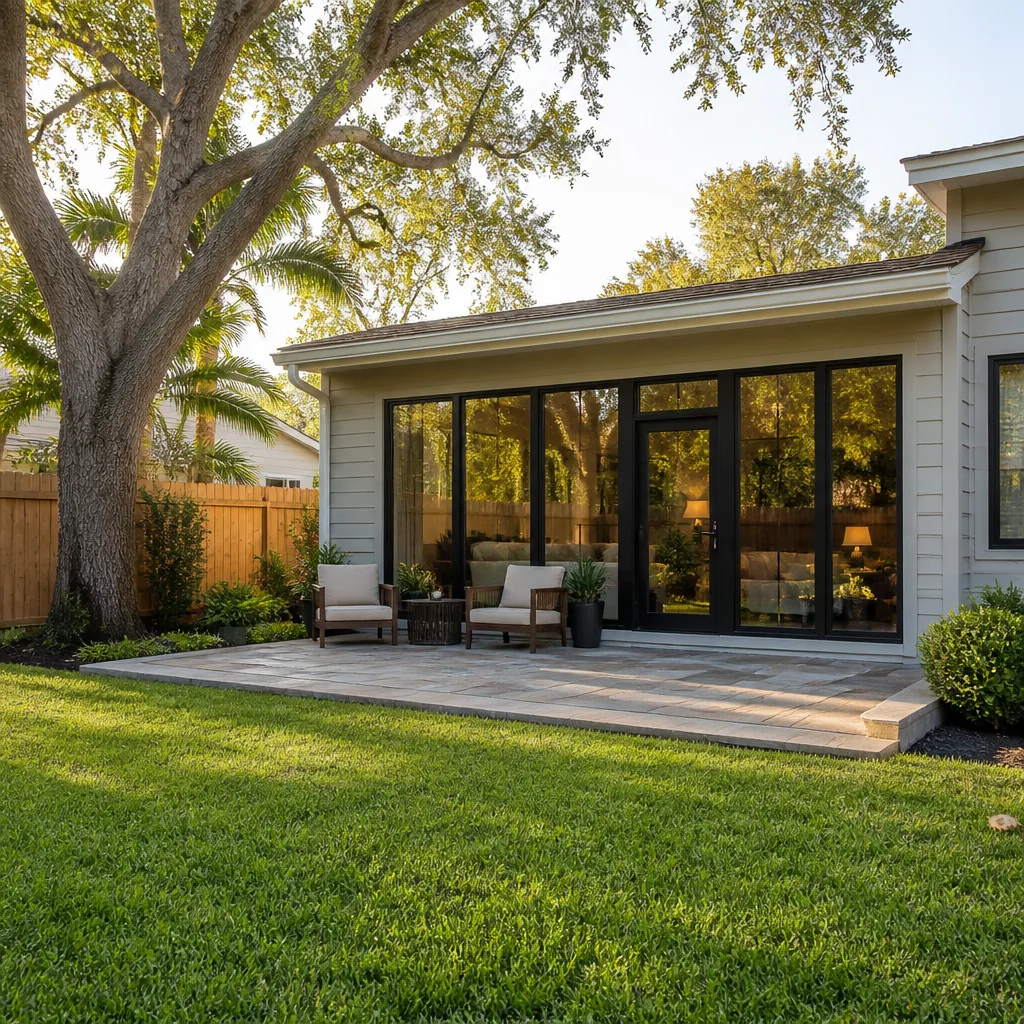
Homeowners in North Miami often compare aluminum against vinyl, and the wind zone is where the choice really decides itself. Vinyl fencing can be approved for the HVHZ, but its performance under sustained wind and impact differs from aluminum in ways that change how it’s installed.
Aluminum is a metal system with a powder-coated finish, and it behaves predictably under load: the posts and rails flex and return, and the modular connections are tested to a defined rating. That means the installation has to respect the tested assembly – the anchoring method, post embedment and spans all have to match the approval. In HVHZ work, a contractor who overspans the panels or substitutes a lighter post breaks the assembly’s tested performance, even if the panels are genuine ActiveYards.
Vinyl, by contrast, is a rigid polymer; it can crack under impact and its color and surface degrade faster in salt air and intense UV. We’ve seen North Miami vinyl runs go chalky in a few summers. Aluminum, properly installed in the local soil, holds its finish far longer – which is exactly why getting the footings and anchoring right for the wind zone matters so much.
When the fence work turns into a larger yard or exterior project, or when you’re weighing related improvements, our team covers the full scope of a North Miami home renovation and the general contracting that goes around it. For interior projects that homeowners often pair with an exterior upgrade, see our bathroom remodeling in North Miami page and the kitchen remodeling in North Miami work we do under the same written-price standard.
When to call a pro instead of going it alone
If your fence line sits near a canal, a property line, or a low-lying corner of the lot, the footing and permit work is not a weekend project. Wind-load anchoring, soil adjustments and NOA compliance fall squarely into licensed general contractor territory. In our experience, the homeowners who get the longest life out of an ActiveYards run are the ones who had the footings engineered for their lot, not borrowed from a neighbor.
Related services in North Miami: if the fence is part of a bigger exterior or interior plan, start with our general contractor in North Miami page.
The Bottom Line
ActiveYards aluminum is a solid product, and it’s a strong fit for North Miami’s look – but the fence you get is only as good as the footings under it and the permit file behind it. Check three things before you sign: the contractor’s soil approach, the NOA number, and a written quote that itemizes post gauge, footing spec and permit fee. Get those in writing and you’ve protected the warranty and your wind-load compliance.
We give every homeowner a written price before any work starts, back it with our 365-Day Done Right Promise, and send background-checked, uniformed technicians to your property – the same standard on every job. A live person answers our phone around the clock, so you’re never stuck in a voicemail maze.
If you’re in North Miami and want help with an ActiveYards installation or a broader remodel, Penhallow Remodeling North Miami offers free estimates – call (888) 255-7411. The call is free, the estimate is free, and there’s no pressure to book a thing.
Frequently Asked Questions
Usually yes. In Miami-Dade County, fencing typically requires a permit when it exceeds the height threshold or sits on a property line, and because the county is in the High Velocity Hurricane Zone, the fence and anchoring must meet wind-load rules. Confirm the current NOA for the exact product and have the permit fee listed separately on your quote.
North Miami’s high-sand soil and coastal water table demand deeper, wider footings and a concrete mix that resists salt and sulfate attack. A standard inland footing spec won’t hold here, which is why local contractors adjust depth and mix to the lot rather than using a one-size spec. Ask to see the footing dimensions in writing.
Check plumb on every post, confirm the panel rails seat fully into the post channels with the right hardware, and verify footing depth and diameter match the plan before concrete is poured. Ask for the NOA number and make sure the anchoring method on site matches the approved assembly.
In the HVHZ, aluminum generally holds up better than vinyl against salt air, UV and wind load, and its powder-coated finish lasts longer. The trade-off is that aluminum’s performance depends entirely on respecting the tested assembly – correct post embedment, anchoring and spans. Get those right and aluminum is the stronger long-term choice.
Call (888) 255-7411 for an exact quote – estimates are free.
Written by the team at Penhallow Remodeling North Miami.
Need Construction Help?
Call Penhallow Remodeling North Miami - licensed & insured, here with fast after-hours help in North Miami.
(888) 255-7411