Last updated November 17, 2026








Free written scope consultation - allowances, timeline, and change-order rules on paper before a single trade is scheduled
Bathroom Remodeling Warning Signs Every Homeowner Should Know
Here’s the part most homeowners learn too late: the contractor who pulls no permit isn’t just cutting a corner, he’s quietly transferring risk onto you. In Miami-Dade County, an unpermitted bathroom remodel can give your homeowner’s insurance carrier grounds to deny a water-damage claim the next time a supply line fails behind that new tile. The signs that a bathroom job is heading sideways are rarely dramatic. They’re small procedural skips – a missing permit card, a change order given by voice instead of on paper, a crew member who can’t tell you who the general contractor is. This guide walks through the red flags before you sign and the ones that show up mid-project, with the local permit rules that apply right here in North Miami.
Quick Answer
The clearest warning signs of a bad bathroom contractor are the absence of a written price before work starts, no license number offered when you ask, a cash-only deposit above 10%, and a missing permit card on a job that legally requires one. Mid-project, watch for crew changes with no notice, materials that don’t match the written spec, and a “guarantee” that names no remedy. In North Miami, where the humidity runs high year-round and Miami-Dade permitting is strict, these small skips are what separate a remodel that holds for decades from one that fails in eighteen months.
Styles & brands we work with
- Kitchen remodeling
- Bathroom remodeling
- Home additions & ADU
- Roofing
- Windows & doors
- Driveway & pavers
- Fence
Table of Contents
- Pre-Hire Warning Signs: What to Catch Before You Sign
- Miami-Dade Bathroom Permits: When They’re Required and How to Verify One
- Mid-Project Warning Signs Every Homeowner Should Recognize
- The Substrate Switch: The Quietest Way a Remodel Gets Cheaper
- What a Real Written Guarantee Looks Like, and What Boilerplate Actually Covers
- The 5-Question Script for Getting Honest Status Updates Mid-Project
Pre-Hire Warning Signs: What to Catch Before You Sign
Most bathroom remodels go wrong before the first tile is ordered. The early signals are procedural, and they’re easy to test for in a single first meeting. Ask for a written price, a license number, and a deposit structure, then watch what happens. A contractor who’s been in business, who carries the right insurance, and who expects the job to be inspected will hand you all three without flinching.
Run through this checklist before you sign anything:
- No written price, only a verbal ballpark. If the number feels like it could shift after demo day, it will. A legitimate remodeling contractor puts the price in writing before any work starts, in line-item form, so you can compare cabinet line to cabinet line.
- No license number offered up front. In Florida, ask for the state license number and verify it yourself against the Florida DBPR database before the first payment. If the contractor hesitates, that’s the answer.
- Cash-only deposit above 10%. Florida law caps the deposit on a home improvement contract at 10% of the contract price (or the cost of materials plus 10%, whichever is less). A contractor demanding 30% cash before the first delivery is either undercapitalized or planning to disappear.
- No written guarantee. Ask what happens if the shower pan leaks in eight months. If the answer is “call me and I’ll take care of it,” that’s a promise, not a guarantee.
- No physical business address or verifiable trade references. A contractor who can’t produce three recent references you can call isn’t ready to enter your bathroom.
- Crew members you’ve never been introduced to. Ask who will actually be in your home. Background-checked, uniformed technicians are the standard, not the upsell.
Any one of these is worth a second call. Two or more together is a walk-away. If you’re early in the planning phase, our bathroom remodeling in North Miami guide covers how a properly run job sequences from first walk-through to final inspection.
Miami-Dade Bathroom Permits: When They’re Required and How to Verify One
A bathroom remodel in North Miami requires a permit any time you’re moving plumbing, adding or relocating electrical circuits, altering walls or structural elements, or replacing a shower pan and tile assembly where waterproofing is part of the scope. Cosmetic-only work (paint, a new vanity, a swap-in toilet in the same location) typically does not. When in doubt, call the Miami-Dade County Building Department directly – they will tell you yes or no in a two-minute phone call.
Verifying a permit was actually pulled is the step most homeowners skip. Do it in this order:
- Get the permit number in writing. The contractor should be able to hand you the permit number within a week of contract signing. If they can’t, no permit was filed.
- Look it up yourself. Miami-Dade’s online permit portal lets you search by address or permit number. The record should show the scope of work matching your contract, the named contractor matching your contract, and the inspections scheduled.
- Confirm the inspection card is on-site. Florida requires an inspection card to be visible at the job site. Photograph it on day one.
- Watch for the inspections. A bathroom remodel typically triggers a rough-in plumbing inspection, a rough-in electrical inspection, and a final inspection. If the walls are being closed without an inspection between, that’s a problem.
The insurance angle here is real. A water loss behind unpermitted tile work is one of the first things a Miami-Dade adjuster will flag, and a denied claim on a $15,000 water-damage event is a far bigger loss than the permit fee ever was. Homeowners in North Miami, particularly in older blocks of Keystone Point and Griffing Park where supply lines are original, should treat the permit as insurance on the insurance. For the broader context on how a general contractor coordinates trades and inspections, see our page on the General Contractor in North Miami.
Mid-Project Warning Signs Every Homeowner Should Recognize
Once work begins, the red flags shift from paperwork to process. These are the ones we’ve seen trip up North Miami homeowners on jobs they didn’t walk away from in time:
- Crew changes without notice. A new face appears on Monday with no explanation. Ask who they are, who they work for, and confirm the GC’s name. If the crew can’t name the company they’re working under, the job may have been subbed out to a third party you never met.
- Materials on-site that don’t match the written spec. The contract says Cambria quartz and the boxes say something else. Or the cabinetry is not the KraftMaid line you selected. Photograph every delivery before it’s installed and cross-check against the written line-item on the spec sheet.
- Verbal change orders. “Hey, while we’re in here, do you want us to…” If it isn’t written, it isn’t real. A legitimate contractor issues a written change order with a price, scope, and schedule impact before that work starts, even for a $500 change.
- No clean-up at end of day. A professional crew leaves the site walkable each evening. Debris piled for weeks is often a sign the crew is juggling three jobs and yours isn’t getting full attention.
- Unanswered questions about a failed inspection. If the county flagged something on rough-in and the contractor’s response is “don’t worry about it,” worry about it. Failed inspections must be resolved before walls close.
- Sudden “additions” to the price that weren’t in the change order. If the invoice is growing but the paperwork isn’t, the number on day one wasn’t the number on the invoice – which is exactly what a written price is supposed to prevent.
The substrate question belongs here too, and it’s important enough to have its own section below.
The Substrate Switch: The Quietest Way a Remodel Gets Cheaper
Ask any homeowner who’s lived through a failed shower tile job in South Florida what went wrong and you’ll usually hear “the tile cracked” or “mold appeared behind the wall.” Almost always, the culprit is what was behind the tile. The substrate is the layer between your wall framing and your finished tile, and in a wet area it’s the difference between a waterproof assembly and a wall that soaks quietly for two years before you know it. Cement board with a proper waterproofing membrane is the standard. Cheaper substitutes – regular drywall, greenboard where cement board was specified, or a membrane brand other than the one written into the contract – are the quiet hack.
How to catch a substrate switch before tile goes up:
- Read your spec sheet for the word “membrane.” The contract should name the waterproofing system (for example, a Schluter Kerdi or a Laticrete Hydro Ban system) by brand and product. If it just says “waterproofing,” ask for the brand in writing.
- Inspect before the backer board covers the framing. Ask the contractor to text you a photo of the open wall with the waterproofing in place, before the tile layer goes on. This is a 60-second ask and a reasonable contractor will do it without hesitation.
- Match the on-site materials to the spec. Sakrete, for example, sells mortar and backer products at multiple price points; the specific SKU on the bag should match what your contract specifies.
- Ask what happens at the shower pan curb and floor transition. These are where improper waterproofing fails first in North Miami’s humidity. A vague answer here is the tell.
If the tile is already up and you’re unsure what’s behind it, the only honest answer is to open a small inspection area at a less-visible corner or consult an inspector. Don’t let anyone tell you it’s fine based on looking at the surface.
What a Real Written Guarantee Looks Like, and What Boilerplate Actually Covers
The phrase “workmanship warranty” is used loosely, and the difference between a real guarantee and its shadow is enormous. A workmanship warranty is a general promise that the contractor will fix defects in his work. A guarantee with a named remedy tells you exactly what happens, how fast, and at whose cost when something fails. The first is often boilerplate. The second protects you.
Here’s what to look for in writing:
- A defined term. “One-year workmanship warranty” or similar. Vague reference to “as required by law” is boilerplate.
- A named remedy. “If the shower pan fails within the warranty period, we will remove and replace the pan and tile at no cost to the homeowner.” A guarantee names who does what, when, and at what price.
- A named person or process to call. A phone number that reaches a live person, not a generic email address. Ours answers around the clock for a reason: if the work fails, you don’t want to be leaving a voicemail at 11 pm on a Sunday.
- A stated start window for the return visit. “We will schedule the fix within five business days of your call” is a promise. “We’ll work you in” is not.
- A product warranty stacking underneath it. Cambria quartz, for example, carries its own manufacturer warranty that runs alongside the installation guarantee. The layer below the contractor’s promise matters.
What boilerplate covers, in practice, is usually close to nothing. Watch for language that limits the warranty to “materials only” (leaving labor on you), excludes “damage caused by normal wear” (a shower leak is normal wear at year three), or requires you to prove negligence in court before they’ll return a call. If the guarantee can’t survive a plain-English reading, it isn’t a guarantee.
The standard we work to under The Kingswell Way is simple: say the price before the work, show up in the window we gave, leave the place cleaner than we found it, and back the work for 365 days after completion – with a real remedy if it fails. That’s on every written project.
The 5-Question Script for Getting Honest Status Updates Mid-Project
Calling your contractor to ask “how’s it going” gets you a smile and nothing else. Here’s a script that gets real answers without turning the relationship adversarial. Ask these five questions in a single text or email every Friday during the job. Putting them in writing keeps it professional and gives you a paper trail if things go sideways.
- “What percentage of the job is complete, and what’s left on the punch list?” Forcing a percentage and a list gets a specific answer or reveals that there isn’t one.
- “What inspections are completed or scheduled for next week?” If the answer is “no inspections are scheduled,” ask why.
- “What’s the next milestone date we agreed on, and are we tracking to it?” Compare to the schedule you were given at signing.
- “Are there any change orders pending on your side that I haven’t seen in writing yet?” This is the pressure valve. Any contractor who’s been quietly adding scope has to either produce the paperwork or admit the work is unauthorized.
- “What should I be looking at this week that I haven’t asked about?” The good contractors will answer this one in two paragraphs. The ones who won’t are telling you something.
If your contractor won’t answer these in writing, that’s the sign. For homeowners comparing what’s normal, our kitchen remodeling in North Miami guide covers the same weekly reporting rhythm on a different room, and the Penhallow Remodeling North Miami home page lays out how our pricing and guarantee work before any project begins.
Common Mistakes to Avoid
- Signing a contract with a blank change-order clause. If the change-order process isn’t spelled out (written, priced, approved before work), every mid-job “while we’re in here” becomes a verbal handshake that gets disputed later.
- Accepting a permit “as a courtesy.” Some contractors will tell you a permit “isn’t really needed” for a bathroom refresh. In Miami-Dade, if the scope touches plumbing, electrical, or the shower assembly, it’s needed. Pulling it yourself as a homeowner for a full remodel is possible but puts the compliance burden squarely on you; better to require it in the contract.
- Paying the final draw before the punch list closes. Hold the last 10% until the punch list is done and the final inspection has passed. Any contractor who pressures you to release it before is signaling how the post-job warranty conversation will go.
- Selecting cabinetry and fixtures off a phone photo. In a North Miami bathroom with afternoon heat and humidity swings, door finishes and hardware corrode differently. See the product in person at a showroom before you spec it in writing.
- Trusting a “10-year guarantee” with no remedy. A number without a remedy is a number. Ask what happens the day you call to use it.
- Letting the same crew who did the demo do the waterproofing. Some bathroom scopes pull in a dedicated tile and waterproofing trade for a reason. Ask who does the shower assembly, specifically.
- Not photographing deliveries. Every delivered box, tub, and panel should be photographed on arrival, because once installed, the difference between your specified product and a substitute is invisible.
See the difference
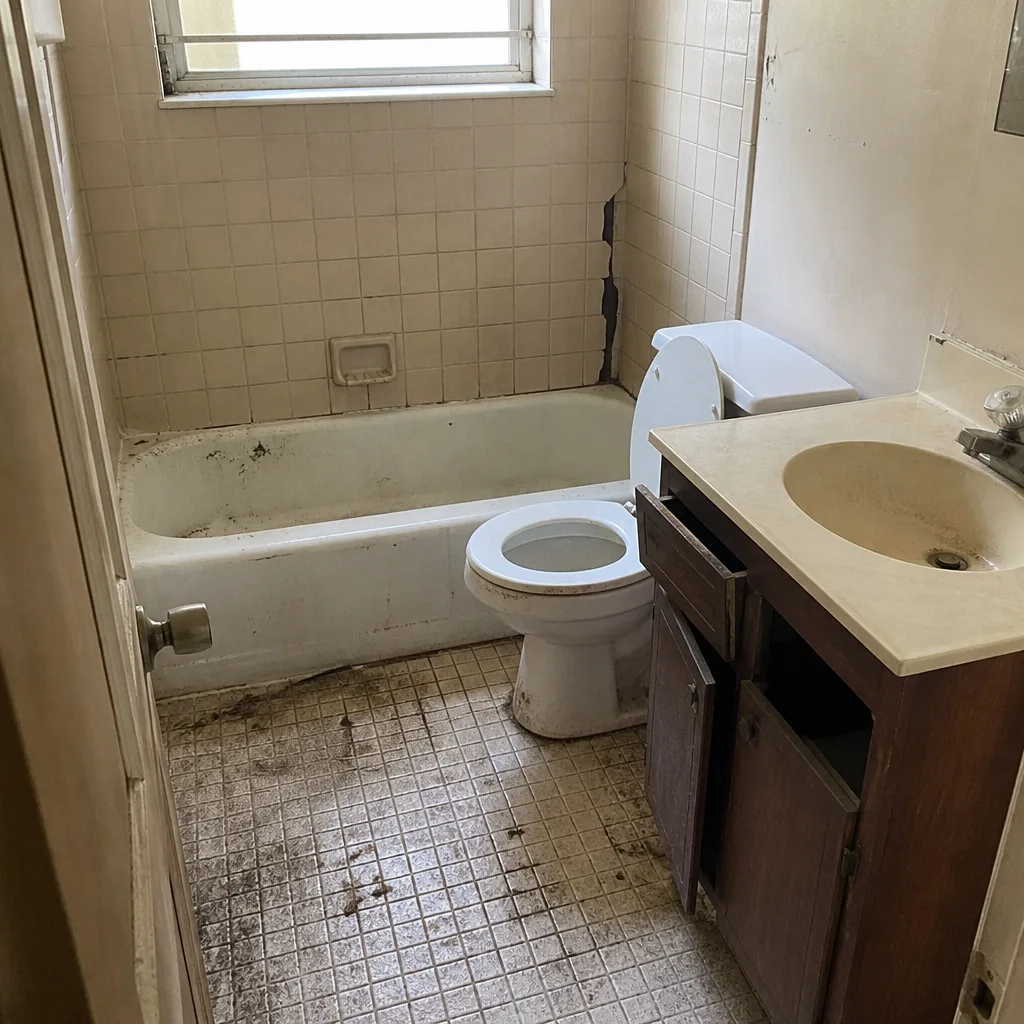 Before
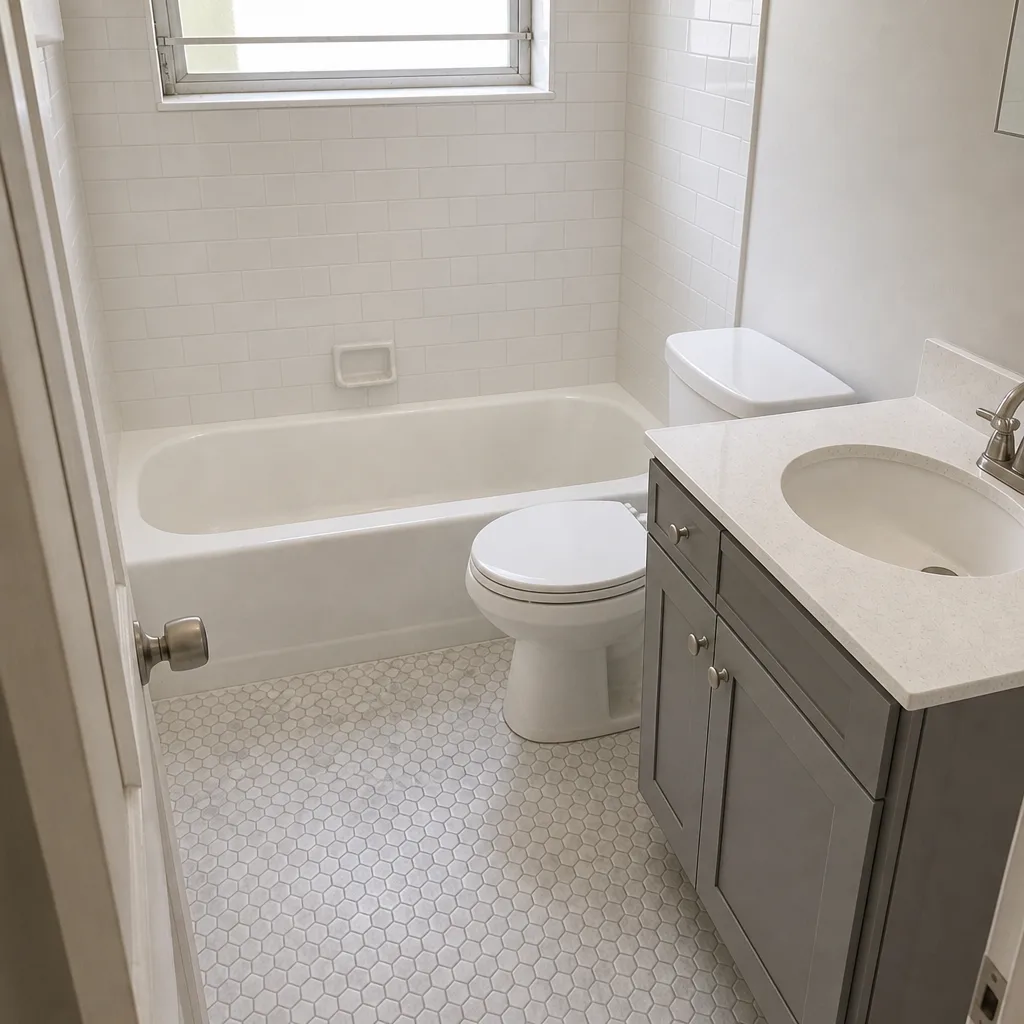 After
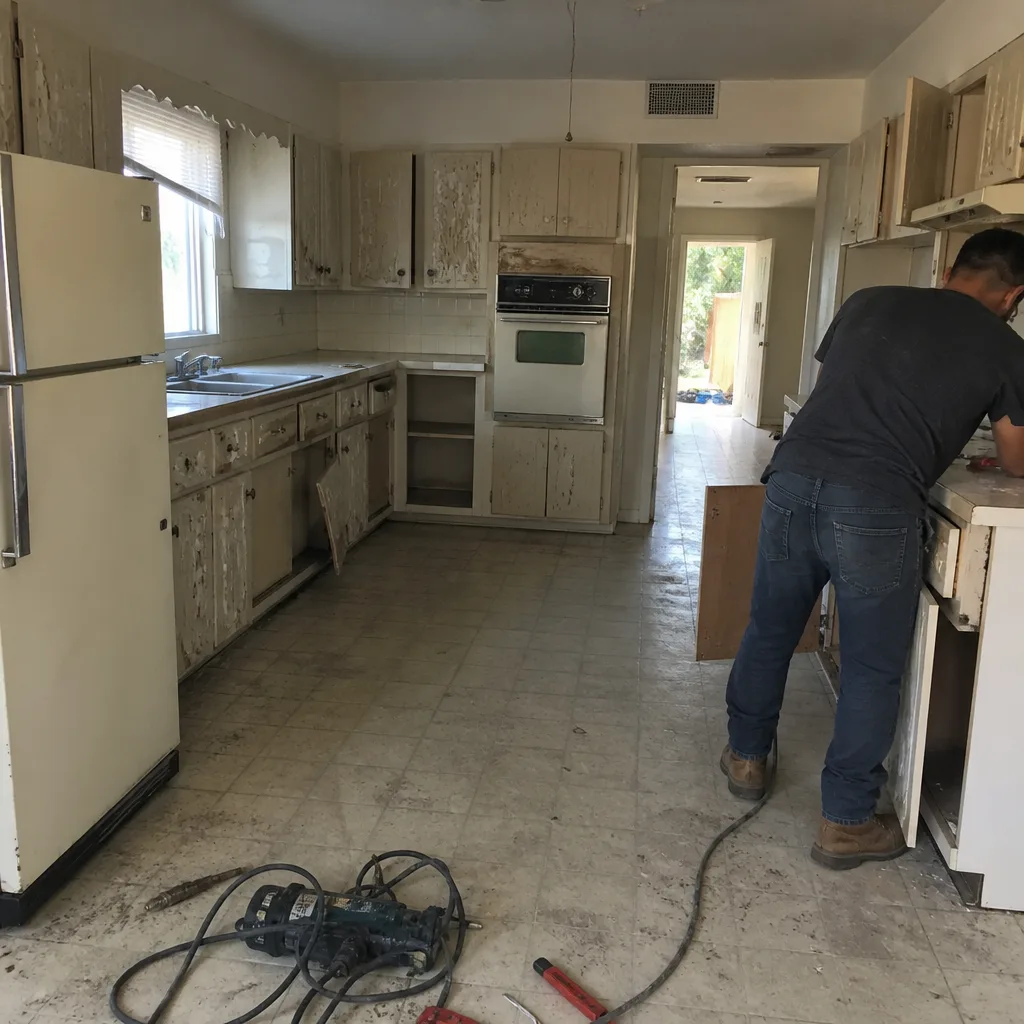 Before
 After
 Before
 After
When to Call a Professional
Some warning signs are worth a conversation. Others are worth stopping the job. Call a professional immediately if the contractor has no verifiable license number, if no permit was pulled on a scope that requires one, if crew members can’t name the company they work for, or if a change to the written spec has happened without a signed change order. Call us, too, if you’re simply unsure – our technicians have up to 22 years of experience reading these situations and can tell you in a five-minute phone call whether what you’re seeing is normal or not. Penhallow Remodeling North Miami offers free estimates in North Miami – call (888) 255-7411 to schedule yours. Every project gets a written price before work starts, a written guarantee on every trade, and a live person answering the phone at any hour.
Frequently Asked Questions

Ask for the permit number in writing within five business days of signing, then look it up yourself in the Miami-Dade County online permit portal using the job address or the number. The record should show the scope matching your contract and the named contractor matching your contract. Photograph the inspection card on the wall on day one – if it isn’t there, no permit was filed. Call (888) 255-7411 if you’re unsure what you’re looking at.
A workmanship warranty is a general promise to fix defects; a written guarantee names the term, the remedy, who pays for it, and how fast the contractor returns when something fails. If your “guarantee” excludes normal wear, covers materials only, or has no named remedy, it isn’t a guarantee. Call (888) 255-7411 to see what a written guarantee looks like before you sign anyone’s contract.
A full hall bathroom in North Miami typically runs $14,000 to $28,000; a primary bath with layout changes, custom cabinetry, and stone typically runs $32,000 to $65,000. The two biggest drivers are whether the layout is changing (plumbing relocation adds $3,000 to $8,000) and the cabinet and countertop lines you select – KraftMaid versus custom cabinetry, or Silestone versus Cambria, can swing the number by several thousand. Call (888) 255-7411 for a written line-item quote – estimates are free.
It shouldn’t if you have a written price with a defined change-order process and the walls haven’t opened up to reveal rot or old code issues. When a change is genuinely needed after demo, a written change order with the price and schedule impact should arrive before that work starts. If a contractor won’t commit a price to writing up front or won’t specify the change-order process, the “price will change” conversation isn’t a matter of if. Call (888) 255-7411 for a written price before anything gets pulled.
A hall bath typically takes four to six weeks from demo to final inspection. A primary bath with layout changes runs eight to twelve weeks. In North Miami, the two scheduling factors specific to the area are Miami-Dade permit review times (typically two to four weeks for a bathroom scope) and humidity – not because it slows the work, but because setting materials and grouts need to cure properly before the room goes back into daily use, which means an extra day or two on some schedules. Call (888) 255-7411 for a schedule written to your scope.
Florida law caps the deposit on a home improvement contract at 10% of the contract price (or the cost of materials plus 10%, whichever is less) unless the contractor carries specific bonding. A contractor demanding a 30% cash-deposit before the first delivery is either undercapitalized or planning to fund the next job on your money. Written price, capped deposit, released draws – that’s the standard. Call (888) 255-7411 for a written project that spells all of this out before you sign.
The Bottom Line
The warning signs of a bathroom remodel going wrong are almost never dramatic – they’re small procedural skips that compound. A missing permit card, a verbal change order, a substrate swapped for a cheaper backer board, a “guarantee” with no named remedy, a contractor who can’t put a price in writing. Catch those before you sign and you’ve eliminated most of the ways a North Miami bathroom job can go sideways. If you’re already mid-project, the 5-question Friday script is the fastest way to get honest status answers without damaging the working relationship. Written price. Written guarantee. A crew that shows up when it said it would, in uniform, with a name you recognize. Those aren’t fancy promises – they’re the minimum standard, and they’re what a properly run bathroom remodel looks like from day one to day done.
If you’d like a walk-through before you commit to a contractor – any contractor – we offer free estimates in North Miami. Call (888) 255-7411 and we’ll put a written price in your hand before a single tile is set.
Written by the team at Penhallow Remodeling North Miami.