Last updated November 17, 2026






Free written scope consultation - allowances, timeline, and change-order rules on paper before a single trade is scheduled
Construction Permits, Codes & Inspections in FL: What You Need to Know
Unpermitted work in Florida doesn’t just risk a fine. It can void your homeowner’s insurance coverage and legally require you to disclose it to every future buyer. That’s the part most homeowners learn too late, usually at the closing table or after a storm claim gets denied. Miami-Dade runs one of the strictest building departments in the country, and for good reason: this is hurricane country, and the codes here exist to keep walls, windows and roofs attached when a Category 4 comes calling. This guide walks through which projects need a permit in North Miami and Miami-Dade County, what the documents actually mean, how inspections work, and where the process usually goes sideways.
Quick Answer
In Miami-Dade County, most structural, electrical, plumbing and mechanical work requires a building permit before it starts, including kitchen remodels, bathroom remodels, water heater replacements and impact window installation. The permit triggers a sequence of inspections, from rough-in to final, and the job isn’t legally closed until a Certificate of Occupancy or final inspection is issued. Skipping any step can cost you insurance coverage, resale leverage and thousands in rework.
Styles & brands we work with
- Kitchen remodeling
- Bathroom remodeling
- Home additions & ADU
- Roofing
- Windows & doors
- Driveway & pavers
- Fence
Table of Contents
- Which Projects Need a Permit in Miami-Dade (and Which Don’t)
- Building Permit vs. Notice of Commencement vs. Certificate of Occupancy
- The HVHZ Rule: Why a Broward-Legal Window May Fail in Miami-Dade
- The Inspection Sequence: Rough-In to Final
- ‘Permit in Hand’ vs. ‘Permit Applied For’
- Why Inspections Fail in North Miami (and How to Avoid It)
- What Permits Cost and How Long They Take
- How to Choose a Contractor Who Handles Permits Right
Which Projects Need a Permit in Miami-Dade (and Which Don’t)
The questions we field most in North Miami aren’t about big additions. They’re about the in-between projects: the water heater, the impact windows, the kitchen refresh. Here’s how the county generally draws the line.
Permits usually required:
- Water heater replacement (yes, even a like-for-like swap)
- Any new or relocated electrical circuit, panel change, or added outlet in a wet zone
- Plumbing rough-in changes, new fixtures that move supply or drain lines, and gas line work
- Impact window and door replacement
- Kitchen remodels that move walls, plumbing or electrical, or replace cabinets and countertops
- Bathroom remodels involving tile, shower pan, plumbing or electrical
- Roof replacement, structural repairs, and any work affecting the building envelope
- Fences over a certain height, sheds, carports and screen enclosures
Usually no permit needed:
- Interior paint, wallpaper and cosmetic drywall patching
- Flooring overlays (laminate, vinyl plank, tile over existing slab, subject to HOA rules)
- Replacing a faucet, toilet or light fixture in the same location without moving lines
- Cabinet refacing that doesn’t touch plumbing or electrical
The gray zone is where homeowners get burned. A “simple” kitchen remodel in a 1960s North Miami house often turns into a permit job the moment you open a wall and find galvanized pipe or aluminum wiring. Our technicians have up to 22 years of experience, and that experience usually says the same thing: pull the permit on the front end rather than discover the problem at inspection.
Building Permit vs. Notice of Commencement vs. Certificate of Occupancy
These three documents get used interchangeably in casual conversation, and they shouldn’t be. Each one does a different job.
The building permit is the county’s authorization to perform specific work under specific plans. It carries an expiration date and requires inspections along the way. It does not mean the work is done or approved.
The Notice of Commencement (NOC) is a separate recorded document, generally required for projects over $2,500, that puts the world on notice that improvements are happening on the property. It protects the homeowner’s title from mechanics’ liens filed by subs and suppliers. It must be posted on site and recorded with the county before work begins. Skipping it is one of the quietest ways homeowners get tangled in lien disputes months after the crew leaves.
The Certificate of Occupancy (CO) is the county’s sign-off that the finished work matches what was permitted and passed every inspection. For remodels that don’t change the use of the building, this often comes in the form of a final inspection and a completion certificate instead of a full CO, but the principle holds: the job isn’t legally closed without it.
What happens if you skip the CO? In Miami-Dade, your property record stays flagged as an open permit. That flag can stall a future sale, block a refinance, and, in a post-storm insurance review, become the reason a claim gets denied. We’ve watched North Miami homeowners spend more unwinding an unclosed permit than the permit itself ever cost. If your remodel is going to reset a whole space, it’s worth understanding how a licensed bathroom remodeling in North Miami or kitchen project handles the paperwork before demo day.
The HVHZ Rule: Why a Broward-Legal Window May Fail in Miami-Dade
The High-Velocity Hurricane Zone (HVHZ) is a designation that covers all of Miami-Dade and Broward counties with the toughest wind-borne debris requirements in Florida. This is the rule homeowners underestimate most.
Every product installed in an HVHZ structure must carry a Miami-Dade County Product Approval or a Florida Product Approval that specifically lists HVHZ compliance. A window sold and installed legally in a Texas or even a northern Florida county may not appear on the approved list. A window that’s fine in Broward may lack the Miami-Dade-specific approval if the manufacturer hasn’t filed for it.
What that means on your job:
- Your permit submittal has to include the product approval numbers, not just the brand
- The inspector checks the approval against the actual glass installed, not the paperwork sheet the sales rep left
- A window swapped out at the last minute for a “close enough” model fails the final inspection, and the whole install comes out
In North Miami, where a lot of housing sits east of I-95 and close to Biscayne Bay, wind pressure requirements are unforgiving. We specify brands with strong HVHZ approvals for this reason, and we only work with manufacturers who can produce the approval documents before a single frame is fabricated. It’s one of the reasons our window and door subs are chosen as carefully as our cabinet and countertop partners, whether the job is a straightforward kitchen remodeling in North Miami or a full whole-home rebuild.
The Inspection Sequence: Rough-In to Final
Inspections happen in a fixed order, and each one has to pass before the next can be scheduled. Here’s what the sequence looks like on a typical remodel.
- Permit issuance and NOC recorded. Work cannot start until both are in place.
- Pre-construction / site inspection (if required). Some trades require a site check before demo.
- Rough-in inspections. Framing, electrical, plumbing and mechanical are checked before walls close. Each trade is inspected separately.
- Insulation / weather barrier inspection. Envelope check, often needed on window and siding work.
- Drywall / close-in. Walls and ceilings close after rough-ins pass.
- Final inspections by trade. Electrical, plumbing, mechanical and building finals are scheduled as work completes.
- Completion certificate / Certificate of Occupancy. The county closes the permit.
Whose job is it to schedule each one? Legally, the permit holder schedules every inspection. On a homeowner-pulled permit, that’s you. On a contractor-pulled permit, it’s the contractor, and you should expect a written schedule showing when each inspection is called and when it passes. Ask for the permit number at the start of the job and keep a copy of every inspection result. In our experience, the homeowners who stay ahead of it are the ones who never get surprised by a red tag.
‘Permit in Hand’ vs. ‘Permit Applied For’
This one sentence is worth the price of the whole guide. When a contractor says work can start Monday, ask which of these two phrases applies:
- Permit applied for means the paperwork has been submitted. The county may still be reviewing plans, requesting revisions, or waiting on product approvals. No inspection can be called, and work cannot legally start.
- Permit in hand means the county has issued the permit and the Notice of Commencement is recorded and posted on site. Work can start, and the first inspection can be scheduled.
We’ve walked into North Miami homes where the “permit” turned out to be an application that had been stalled in plan review for six weeks while the crew was already tearing out cabinets. That is a real problem, and it lands on the homeowner, not the contractor. Getting a written price before work starts is a standard we hold to on every project. So is getting a permit in hand.
Why Inspections Fail in North Miami (and How to Avoid It)
Most failed inspections here fall into a handful of categories. None of them are mysteries, and all of them are avoidable with a schedule and a checklist.
- Wrong HVHZ product approval. A window or door installed with the wrong approval number fails on the spot.
- Missing label on materials. Lumber, glass and fasteners must show their stamps and labels at inspection.
- Rough-in covered too soon. Drywall over unpiped or uninspected electrical means a demolition order.
- Improper termite protection. Miami-Dade has specific requirements around treated lumber and shielding for new construction and some remodels.
- Flashing and envelope details on windows and doors. Coastal air and rain exposure makes flashing the weak point, and inspectors know it.
- Missing NOC posting. A permit in hand without the NOC posted can get you red-tagged at the first inspection.
North Miami’s older neighborhoods, including areas near Sans Souci and Arch Creek, have housing stock from the 1950s and 60s. That means knob-and-tube or aluminum wiring, undersized panels, and cast iron or galvanized plumbing that fails rough-in the moment it’s exposed. This is where a written price up front and a written guarantee matter: changes get priced before they happen, and the work gets inspected against a plan that accounted for what was in the wall, not what the drawing assumed.
What Permits Cost and How Long They Take
Miami-Dade permit fees are based on the valuation of the work and the number of trades involved. Planning ranges below reflect what we typically see on residential remodels in North Miami. Your actual fee depends on the county’s current schedule and the scope of your project.
- Kitchen remodel permit: roughly $350 to $1,200 depending on trades and valuation
- Bathroom remodel permit: roughly $250 to $800
- Water heater replacement: roughly $150 to $300
- Impact window and door replacement: roughly $300 to $900, scaling with unit count
- Full whole-home remodel: several thousand dollars, with trade-specific sub-permits
Timeline: a small permit (water heater) can issue in 1 to 3 business days. A bathroom or kitchen permit typically runs 2 to 6 weeks depending on plan review volume. A whole-home remodel or structural change can run 8 weeks or more. None of that includes inspection scheduling, which generally runs within a few business days per trade but can stretch in heavy season. Plan your living arrangement around the permit timeline, not the crew schedule.
How to Choose a Contractor Who Handles Permits Right
The single best predictor of a smooth permit process is who’s holding the pen. Here’s what to ask before signing anything.
- Are you a state-licensed general contractor? Ask for the license and verify it against the state database before the contract is signed.
- Will you pull the permit and record the NOC? If the answer is “you can pull it as the homeowner,” ask why.
- Will you give me a written price before work starts? Not a range. Not a verbal ballpark. A written number.
- What is the inspection schedule, and how will you tell me when each one passes?
- What happens if an inspection fails? A contractor who expects to pass has a plan for a fail.
- What’s the guarantee, in writing? Ensure it’s spelled out and attached to the contract.
The Kingswell Way asks only that we say the price before the work, show up in the window we gave, and leave the place cleaner than we found it. Those are the right instincts for the permit process too: buy yourself a written timeline, a written price, and a written guarantee, and the paperwork starts to feel less like red tape and more like leverage.
Common Mistakes to Avoid
- Starting demo before the permit issues. It’s the most expensive mistake in this guide. If a crew starts tearing out cabinets before the permit exists, you’re exposed to code enforcement, insurance denial and mandatory rework, and the clock resets once the county catches it.
- Skipping the Notice of Commencement. In North Miami, a single lien filed by an unpaid sub can delay a sale for months. The NOC is a few pages and an extra step, and it protects title in a way a handshake never will.
- Thinking “my contractor is licensed” is enough. Verify the license against the state record and confirm the permit is pulled under that license. Unlicensed subs on a licensed job are still a problem.
- Buying windows before checking HVHZ approval. A beautiful window that doesn’t carry the right Miami-Dade product approval is a very expensive return, and the county will not flex on this one.
- Leaving the job without a final inspection. An open permit on the property record is a silent liability. It can trigger insurance scrutiny after a storm, and it will surface in a title search before a future sale.
- Closing walls before rough-in passes. Inspectors will order the drywall removed. That’s a full re-open of a finished room, and the cost lands on the homeowner when nobody checked the schedule.
- Accepting a verbal estimate. Verbal estimates are the reason most homeowners we meet came to us in the first place. Get a written price before the permit is pulled, and don’t let the number move on demo day.
See the difference
 Before
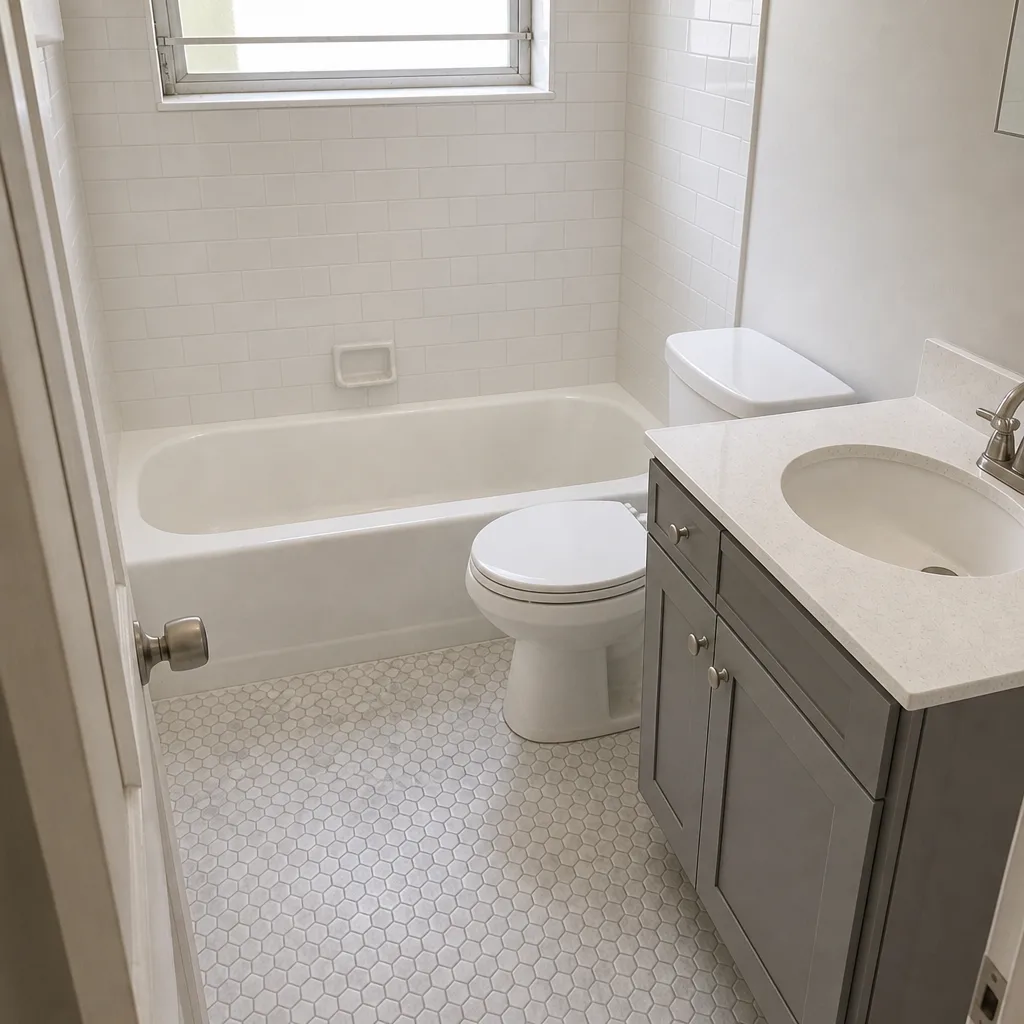 After
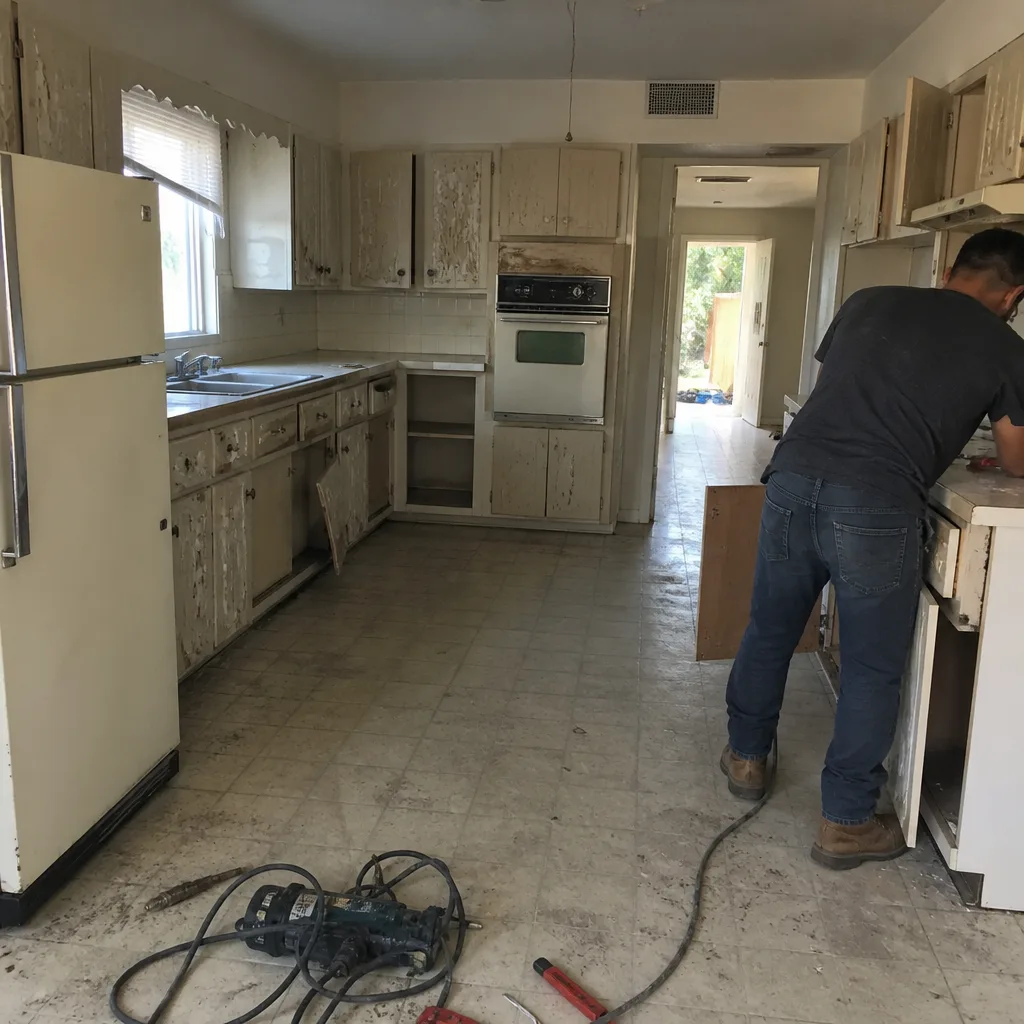 Before
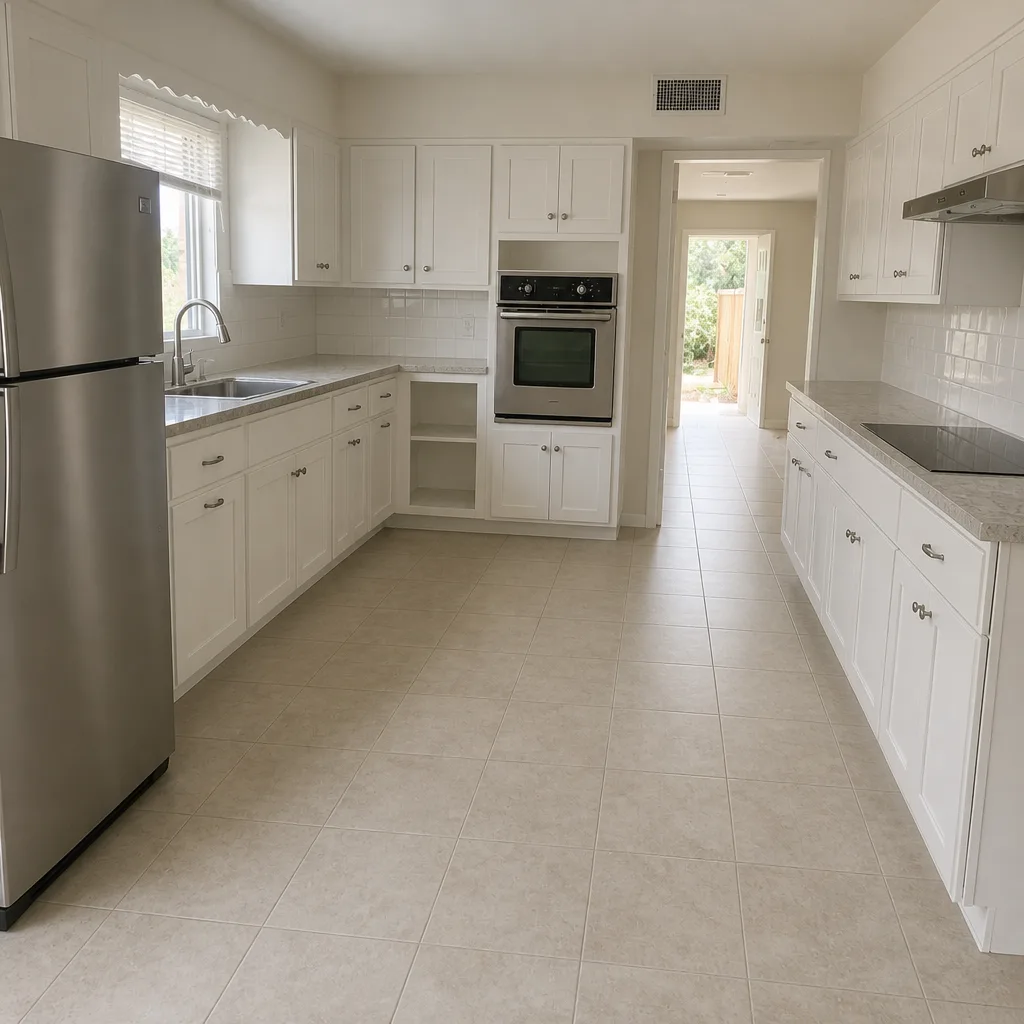 After
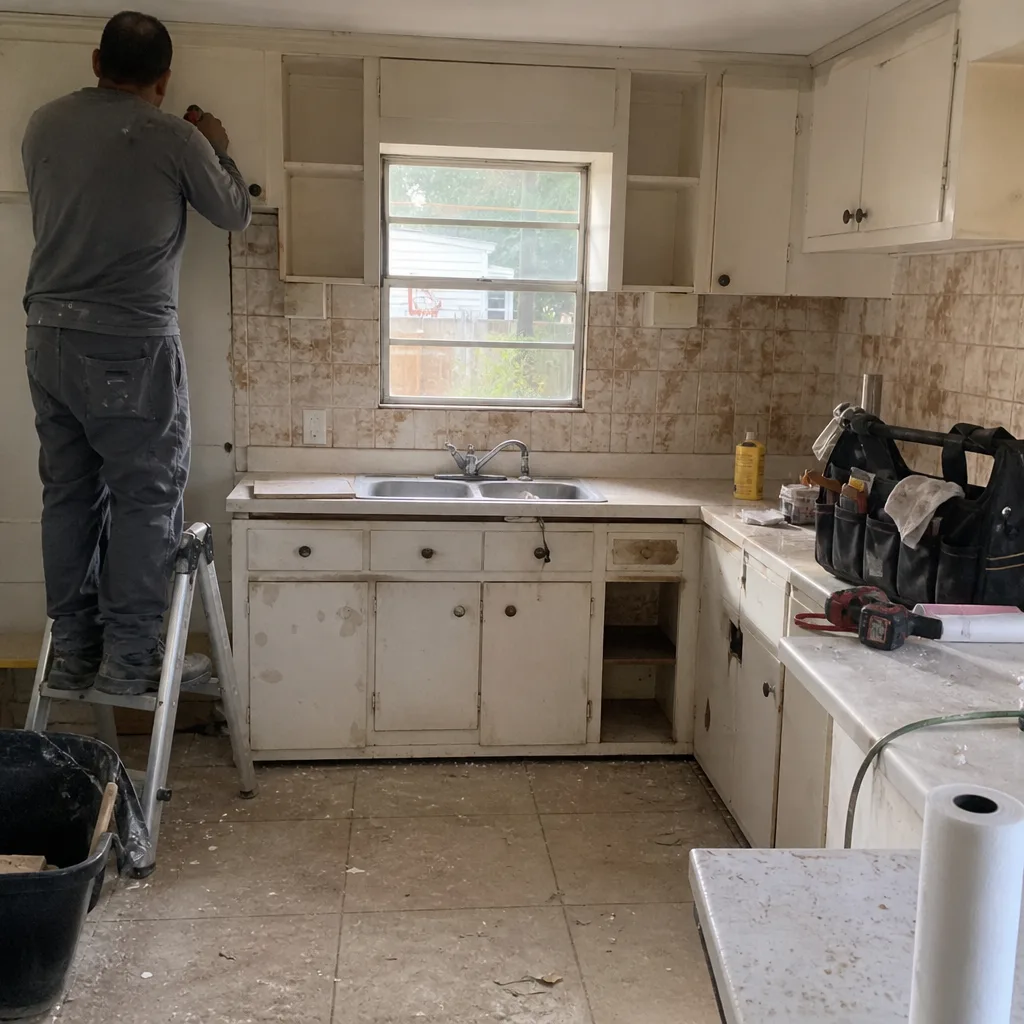 Before
 After
When to Call a Professional
If your project involves moving a wall, plumbing, electrical, windows, a roof, or anything affecting the building envelope in Miami-Dade, it’s a permit job, and it’s a job for a licensed general contractor. Kitchen and bath remodels, impact window replacements, water heater swaps, panel changes and any structural repair all sit in that category. A few things push the decision out of the DIY column entirely: knob-and-tube or aluminum wiring behind the wall, cast iron or galvanized plumbing, an undersized electrical panel, and any work near the HVHZ wind envelope. Penhallow Remodeling North Miami offers free estimates in North Miami. Call (888) 255-7411 to schedule yours. We’ll walk through the scope, tell you which permits the county will require, and hand you a written price before any work starts.
Frequently Asked Questions

Yes, in most cases. A kitchen remodel in North Miami requires a building permit if it involves moving walls, plumbing, electrical or gas lines, replacing cabinets and countertops, or altering the building envelope. A cosmetic refresh like paint, refacing or a flooring overlay may not require one. The county’s rule of thumb is that anything that touches the systems inside the walls needs a permit. Call (888) 255-7411 for a free estimate that includes the permit scope for your specific project.
A small permit like a water heater replacement typically issues in 1 to 3 business days, while a kitchen or bathroom permit generally runs 2 to 6 weeks depending on plan review volume. Whole-home and structural permits can take 8 weeks or more, and the review clock is not something any contractor controls. Plan your timeline around the county’s schedule, not the crew’s availability. Call (888) 255-7411 to talk through realistic timing for your project.
You risk a code enforcement fine, denied insurance coverage, and a mandatory legal disclosure of the unpermitted work to every future buyer. Miami-Dade code enforcement can require a full open-up of finished work to inspect what’s behind the wall, and the rework that follows is far more expensive than the permit would have been. Homeowner’s insurance carriers routinely deny or reduce claims on unpermitted work after a storm. Call (888) 255-7411 for a free estimate on a project that starts with the paperwork done right.
Florida law allows a homeowner to pull a permit on their own primary residence for work they intend to perform themselves, but it shifts every inspection and every code requirement onto you. Once a contractor is doing the work, the permit needs to be pulled under their license, because the inspections are called by the permit holder. If a contractor suggests you pull the permit while they do the work, that’s a red flag. Call (888) 255-7411 and we’ll go through the right way to structure a remodel.
Because Miami-Dade requires Miami-Dade County Product Approval (or an HVHZ-compliant Florida Product Approval that specifically lists it) for products installed in the High-Velocity Hurricane Zone. A window that carries the approval in one jurisdiction may not carry it in the other, and the inspector checks the approval against the actual glass and frame installed. It’s worth understanding the envelope rules before you buy, especially on homes near Biscayne Bay in North Miami. Call (888) 255-7411 and we’ll walk through the approval specifications for your scope.
Residential permits in North Miami typically run about $150 to $300 for a water heater, $250 to $800 for a bathroom remodel, $350 to $1,200 for a kitchen remodel, and several thousand dollars for a whole-home remodel. The exact fee is set by the county based on the valuation of the work and the trades involved, not by the contractor. Ask for the permit line to be itemized on your written quote so you can see exactly what you’re paying for. Call (888) 255-7411 for a free estimate.
The Bottom Line
Permits, codes and inspections in Florida aren’t red tape. In Miami-Dade they’re the layer of protection standing between your home and the next Category 4, and they’re your leverage in a sale, a refinance or an insurance claim after a storm. Get the permit before demo. Record the Notice of Commencement. Verify the HVHZ product approval before you buy. Keep the inspection schedule visible and don’t skip the final. And get the price and the guarantee in writing before the first cabinet comes out. That’s the whole game, and it’s one worth playing slowly. For a free estimate on a remodel in North Miami, call Penhallow Remodeling North Miami at (888) 255-7411, or start with a closer look at our general contractor work in North Miami.
Contact

If you’re planning a kitchen or bathroom remodel, a whole-home refresh, or any project that will require a permit in North Miami, call (888) 255-7411 to schedule your free estimate. We’ll walk the scope, tell you what the county will require, and hand you a written price before any work starts. Every project comes with a written guarantee and the 365-Day Done Right Promise, so if something isn’t done right, we come back and make it right at no charge. A live person answers the phone around the clock, and our technicians are background-checked and arrive in uniform. You’ll know exactly who’s in your home and exactly what you’re paying.
Written by the team at Penhallow Remodeling North Miami.