Last updated November 17, 2026





Free written scope consultation - allowances, timeline, and change-order rules on paper before a single trade is scheduled
DIY vs Professional General Contractor: What’s Safe to Do Yourself
In Florida, you can legally act as your own general contractor on your own home. That surprises most homeowners. It also happens to be one of the most expensive pieces of freedom in the state, because the moment you sell, you may have to disclose unpermitted work, and buyers’ lenders routinely walk away from deals over it. The real DIY question in North Miami isn’t whether you have the skill to hang drywall or set tile. It’s whether the job crosses a permit threshold, and what happens to your insurance and your resale value when it does. This guide draws that line for you, plainly, with the actual costs on both sides.
Quick Answer
Painting, tiling over an existing slab, swapping a light fixture on a like-for-like basis, installing a pre-hung interior door, and building a freestanding garden bed are genuinely safe DIY projects in most North Miami homes, usually without a permit. Anything that touches structure, electrical circuits, plumbing supply or drain lines, gas, roofing, or the building envelope requires a licensed contractor and a permit under Miami-Dade rules. The line isn’t skill. It’s the permit.
Styles & brands we work with
- Kitchen remodeling
- Bathroom remodeling
- Home additions & ADU
- Roofing
- Windows & doors
- Driveway & pavers
- Fence
Table of Contents
- Where the Permit Line Actually Sits in Miami-Dade
- What Owner-Builder Status Really Means Under Florida Statute 489
- The Five Remodeling Tasks That Are Safe to DIY
- How Unpermitted Work Affects Your Insurance After a Storm
- The Honest Cost Comparison
- What Happens When You Fail Inspection
- North Miami Neighborhood Context
- When to Call a Professional
Where the Permit Line Actually Sits in Miami-Dade
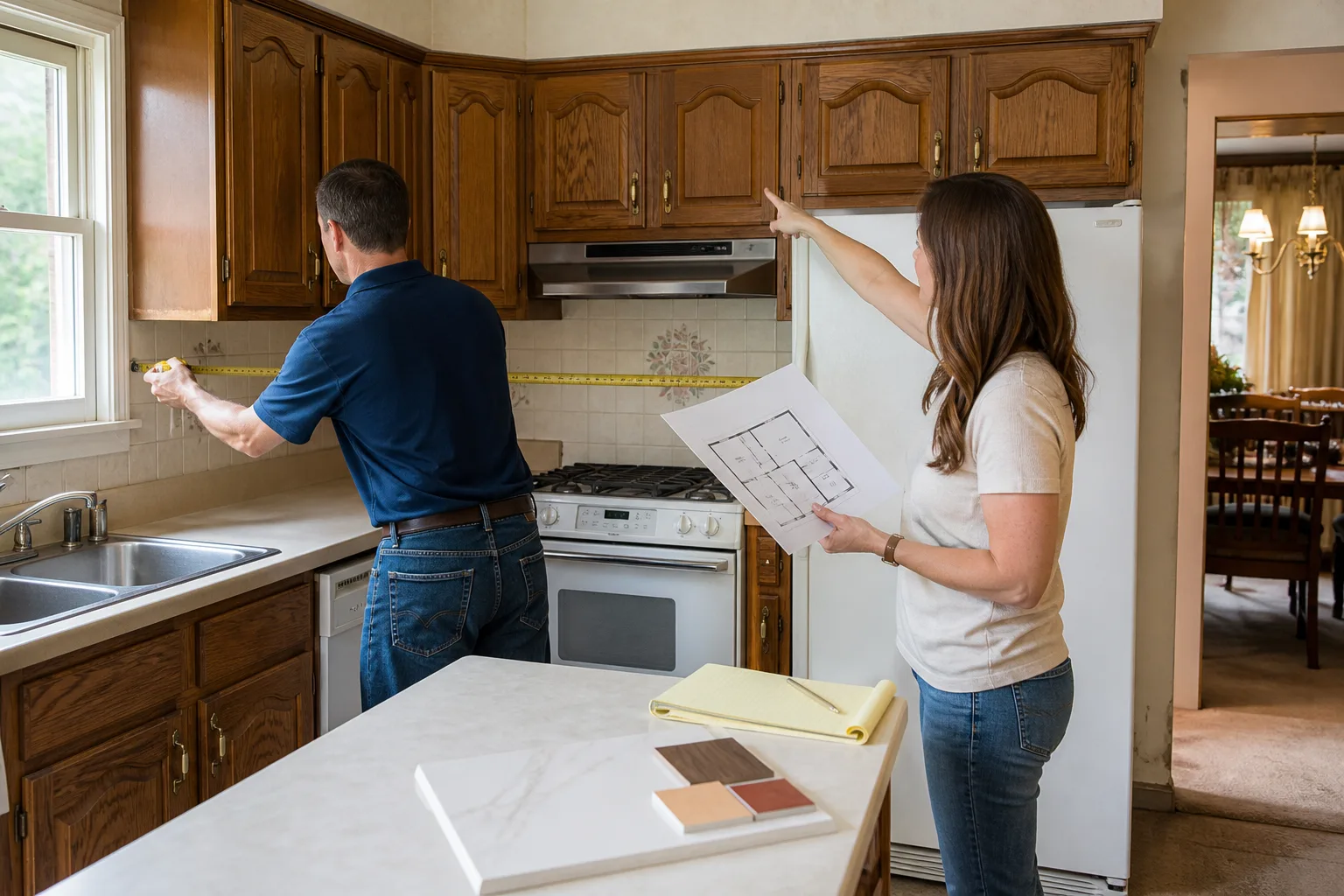
Miami-Dade County issues permits through a unified portal, and the thresholds are not vague. They’re published, and inspectors enforce them. We’ve watched homeowners pull a sink out to “just move it six inches” and wind up with an open permit they didn’t know existed because the drain line re-route triggered a plumbing permit.
Here’s the practical breakdown we use when advising homeowners in North Miami, Miami Shores, and Biscayne Park:
- Structural changes – removing any wall, opening a load-bearing span, adding a header, cutting a beam. Permit required, engineered drawings required. Not a DIY category under any circumstance.
- Electrical beyond like-for-like fixture swaps – adding a circuit, moving an outlet, running a new line for a microwave or a mini-split. Permit required, licensed electrician required.
- Plumbing supply and drain work – moving a toilet, adding a shower valve, relocating a water heater. Permit required, licensed plumber required.
- Roof replacement or structural roof repair – permit required, and in Miami-Dade the product itself must carry a Florida Product Approval or Miami-Dade NOA number. Roofing is also the single highest-risk trade for a homeowner on a ladder.
- Window and door replacement – permit required, and impact-rated products must be listed for the wind zone. This is a Hurricane Andrew legacy rule, and it’s enforced.
- Kitchen and bathroom remodels that move anything – if the layout stays put, cabinet and finish replacement usually needs only a limited-scope permit or none, depending on scope. The moment you move a fixture, you’re in permit territory.
If you’re already planning a larger remodel in North Miami, our General Contractor in North Miami page walks through how permits, inspections, and construction scheduling fit together on a real job. It’s the fastest way to see what a permitted project actually looks like from the inside.
What Owner-Builder Status Really Means Under Florida Statute 489
Florida Statute 489 allows a homeowner to act as their own contractor on their own primary residence, as long as they don’t sell or rent it for a year after the work is done. That’s the whole permit. The statute is short. The liability isn’t.
When you sign as owner-builder, you take on the general contractor’s role in the literal sense:
- You are responsible for pulling every trade permit yourself.
- You are responsible for scheduling every inspection and passing it.
- You are responsible for verifying that every subcontractor you hire is licensed and insured, and you inherit the financial exposure if one is not.
- You are responsible for the workers’ compensation coverage on the job. If an uninsured worker is injured on your property, that exposure lands on you.
- You are responsible for disclosing the work at sale, and for any buyer claims that arise from it.
This is where we’ve seen North Miami homeowners get hit hardest. The savings from skipping a general contractor on a $30,000 kitchen look real until a subcontractor’s insurance lapses and a tile guy gets hurt. That’s not a hypothetical. It happens, and it isn’t covered by your homeowner’s policy the way you’d assume.
Whether you’re planning a Kitchen Remodeling in North Miami or something smaller, the owner-builder calculation is worth running before you sign anything. On jobs over roughly $15,000 in scope, the general contractor’s coordination and insurance contribution typically costs less than the risk you’d carry yourself.
The Five Remodeling Tasks That Are Safe to DIY
Here’s the honest list. These five are genuinely low-risk, permit-free in most North Miami residential contexts, and if you get one wrong, you can fix it yourself on a Saturday.
- Interior painting. Walls, ceilings, trim. Zero permit, zero structural risk. A bad paint job is a do-over, not a disaster.
- Tile replacement over an existing slab. The floor’s already there. You’re removing finish and laying new finish. No code path, no structural envelope touched. Waterproofing in a shower is a different story, see below.
- Like-for-like light fixture swaps. Old fixture off, new fixture on, same junction box, same wire gauge. This is legal for a homeowner in Florida on a same-location, same-wattage swap. Anything else is electrician territory.
- Pre-hung interior door installation. Same rough opening, same frame, new door. No permit. A little patience with shims.
- Cabinet and hardware replacement where the layout doesn’t move. Swap cabinet doors and fronts, change pulls, repaint the cabinet boxes. The moment you relocate a sink base or a range, you’re in plumbing and electrical permit territory.
Notice what’s not on this list. Shower waterproofing. Electrical panel work. Anything on the roof. Anything that touches a gas line. These are the categories where a homeowner call to our line almost always ends with the same advice: get a licensed pro in, even if you can afford to fix it twice.
How Unpermitted Work Affects Your Insurance After a Storm
This is the part of the DIY conversation most guides skip, and it’s the part that costs the most.
Miami-Dade sits in the High Velocity Hurricane Zone, and your homeowner’s policy is priced around that fact. When you file a claim after a storm, your insurer sends an adjuster. That adjuster can and does look for permits. If the damage traces back to unpermitted work, a few things happen:
- The claim on the affected portion can be reduced or denied, because the loss is attributable to work that wasn’t inspected to code.
- The work itself can be excluded from the covered value, meaning you’re rebuilding it out of pocket.
- Your policy can be re-rated upward or non-renewed at the next cycle once the unpermitted work is on record.
We’ve watched a North Miami homeowner lose an $18,000 roof-related claim because an earlier unpermitted patio enclosure had been tied into the roof structure without an inspection. The insurance company was within its rights. That’s the difference between a DIY win and a DIY catastrophe: not what it costs to build, but what it costs when the storm comes.
Same story after a fire. Electrical work done without a permit is the first thing a fire investigator flags, and the first thing the adjuster excludes. If you want the full picture of what a permitted envelope looks like from the insurance side, our Bathroom Remodeling in North Miami page covers waterproofing and inspection sequencing in plainly useful detail.
The Honest Cost Comparison
Homeowners ask us this every week, so let’s put real numbers on it. Here’s how a North Miami kitchen refresh typically breaks out:
- Cabinet refinishing and new hardware (DIY-safe): $400-$1,200 in materials. Professional finish or new cabinet fronts: $3,500-$12,000 depending on the line. For reference, we install KraftMaid and Wellborn cabinetry, and both carry their own manufacturer warranties alongside ours.
- Countertop replacement: $2,400-$8,500 in North Miami for a typical 25-square-foot kitchen, depending on material. Quartz like Cambria sits at the high end. Laminate sits at the low end but fails faster in our humidity.
- Like-for-like tile floor (DIY-safe): $2-$5 per square foot in materials. Installed: $6-$14 per square foot.
- Bathroom waterproofing + tile (not DIY-safe): $4,500-$12,000 for a full gut, because cement board substrate (the moisture-resistant layer behind your tile) and the waterproofing membrane are what actually keep the water out. Skip either and you’re re-tiling in 18 months.
- Full permitted kitchen remodel in North Miami: $18,000-$55,000 depending on layout, cabinet line, and countertop material.
Now the failure math. We’ve been called to tear out DIY bathroom tile and redo it correctly four times in the last couple of years. The average homeowner spent $3,000-$6,000 on the first attempt and $6,000-$14,000 on the redo, plus the water damage to the wall behind it and the subfloor under it. That’s a six-figure education on a job that looked like a two-weekend project.
The savings on the five DIY-safe tasks above are real: painting, like-for-like tile, fixtures, doors, and cabinet fronts add up to a couple thousand dollars on a typical North Miami project. That’s a genuine win. The savings on anything past the permit line are rarely real, and often inverted.
What Happens When You Fail Inspection
If you’ve pulled a permit and the inspector fails the work, the sequence is unforgiving. You don’t get a partial pass. You get a correction notice, a re-inspection fee, and a schedule that restarts from the earliest available appointment.
- Correction notice is issued. The inspector lists the code deficiencies specifically.
- You schedule a licensed trade to make the correction. If you did the work yourself, you now pay for someone to undo and redo.
- Re-inspection fee is charged. Multiple failures stack the fee and can trigger a referral to the county’s compliance office.
- The permit stays open until the work passes. An open permit can block a future sale, a refinance, or a certificate of occupancy on a new addition.
We’ve seen an open permit on a water heater replacement delay a North Miami closing by six weeks. Six weeks of carrying costs, missed rate lock, and a buyer’s attorney asking why the permit had been sitting open since 2021. The permit was for a $1,400 job.
North Miami Neighborhood Context
The permit question is real everywhere, but it plays out differently block by block in North Miami. In the older sections closer to the bay, we regularly see unpermitted Florida room enclosures from prior decades that were never inspected – which means the next owner inherits the problem. Near Biscayne Park and the older ranch homes around 130th Street, the most common surprise is a plumbing re-route behind a wall that was never permitted, discovered when a buyer’s inspection opens the wall. In the newer townhome developments off Biscayne Boulevard, you’re often dealing with HOA rules layered on top of county rules, and that’s a different calculation entirely.
Our climate adds a layer most DIY guides ignore. Miami-Dade humidity and the summer rain cycle mean waterproofing failures show up faster here than they would in a drier market. A shower that fails in Phoenix takes two years to show a stain. In North Miami, you’ll see it in a season. That’s why membrane work is on our do-not-DIY list even though the tile itself is DIY-friendly.
Wind-loaded rain (the sideways kind that comes with a tropical system) also exposes any gap in the building envelope within the first real storm. Roof penetrations, window flashing, and door thresholds are all envelope work. If you’ve done any of those without a permit, your insurance claim exposure grows every year you don’t correct it.
Our home base is Penhallow Remodeling North Miami, and most of our work is in the North Miami, Miami Shores, and Biscayne Park corridor. If you want to see how we actually build on this type of home stock, that page lays out the neighborhood context in detail.
When to Call a Professional
Call us in when any of the following is true: the job needs a permit, the job touches water, gas, or electricity beyond a fixture swap, the job is inside the building envelope, or the job involves structural work of any kind. Also call us when you’re on a resale timeline, because an unpermitted project on a home you’re selling in the next three years is a financial liability, not a savings.
Our technicians have up to 22 years of experience, and we’ve seen enough of what happens after the second attempt on a bathroom waterproofing job to know that “I’ll just do it myself” gets expensive fast. Every project we take on gets a written price before any work starts, on a written guarantee that covers it for 365 days. If the work fails inside that window, we come back and fix it at no charge. That guarantee is the difference between a contractor and a handyman, and it’s the reason a lot of the homeowners we work with started out as DIY-first people.
For a free estimate on a North Miami project, call (888) 255-7411. A live person answers. Every time.
See the difference
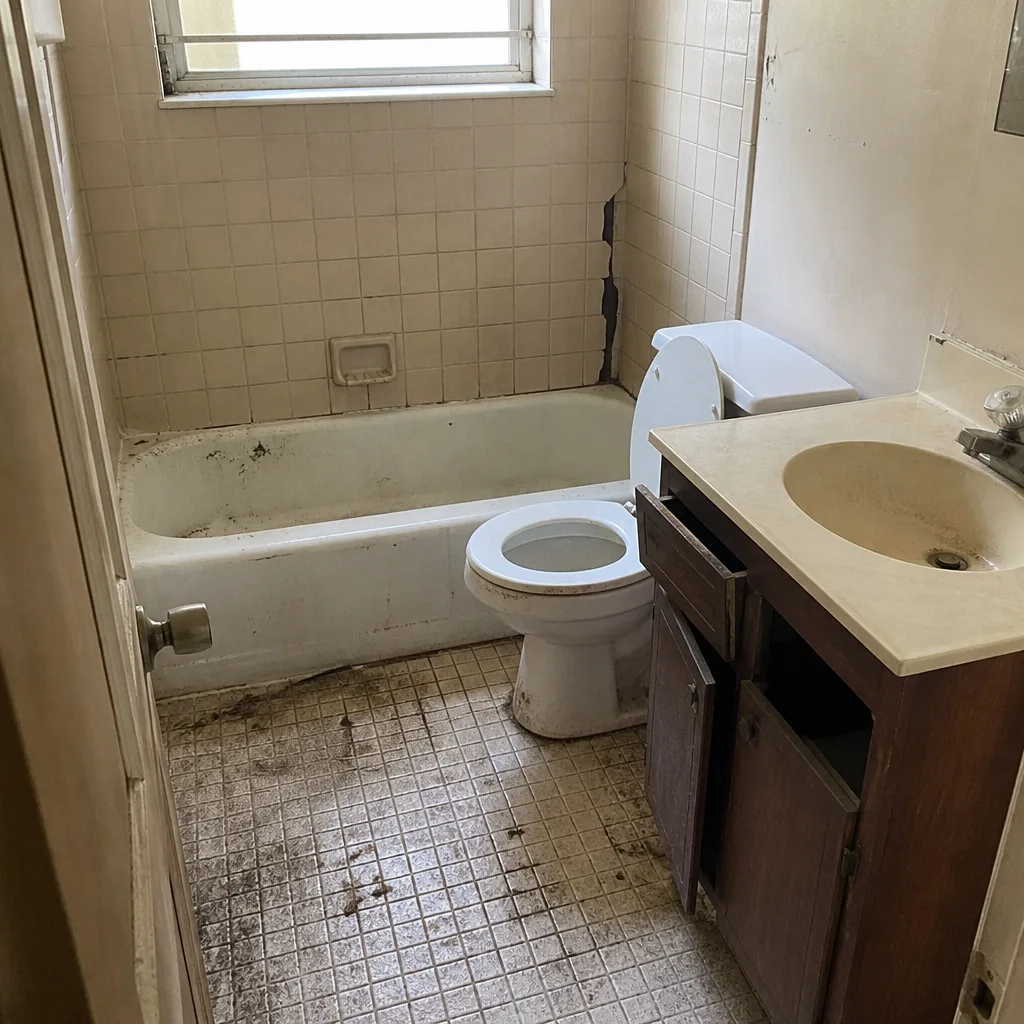 Before
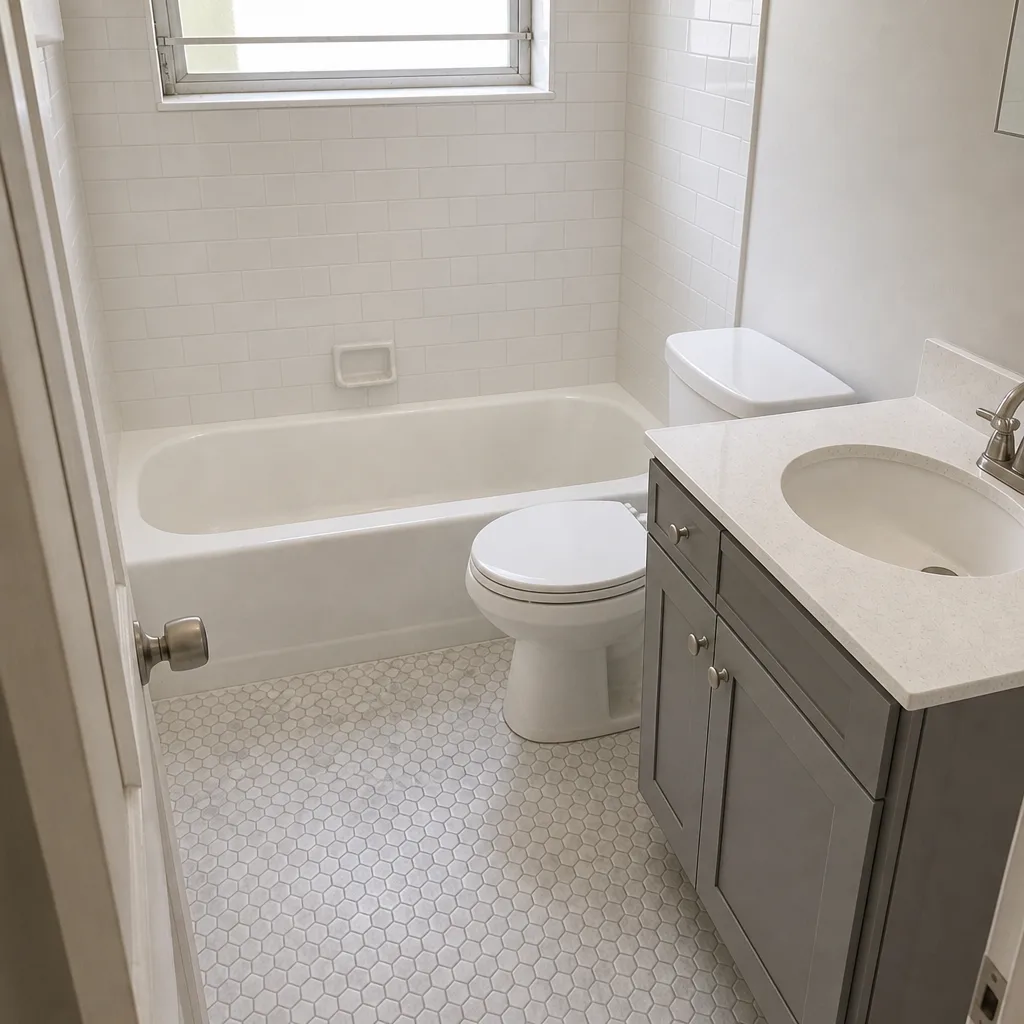 After
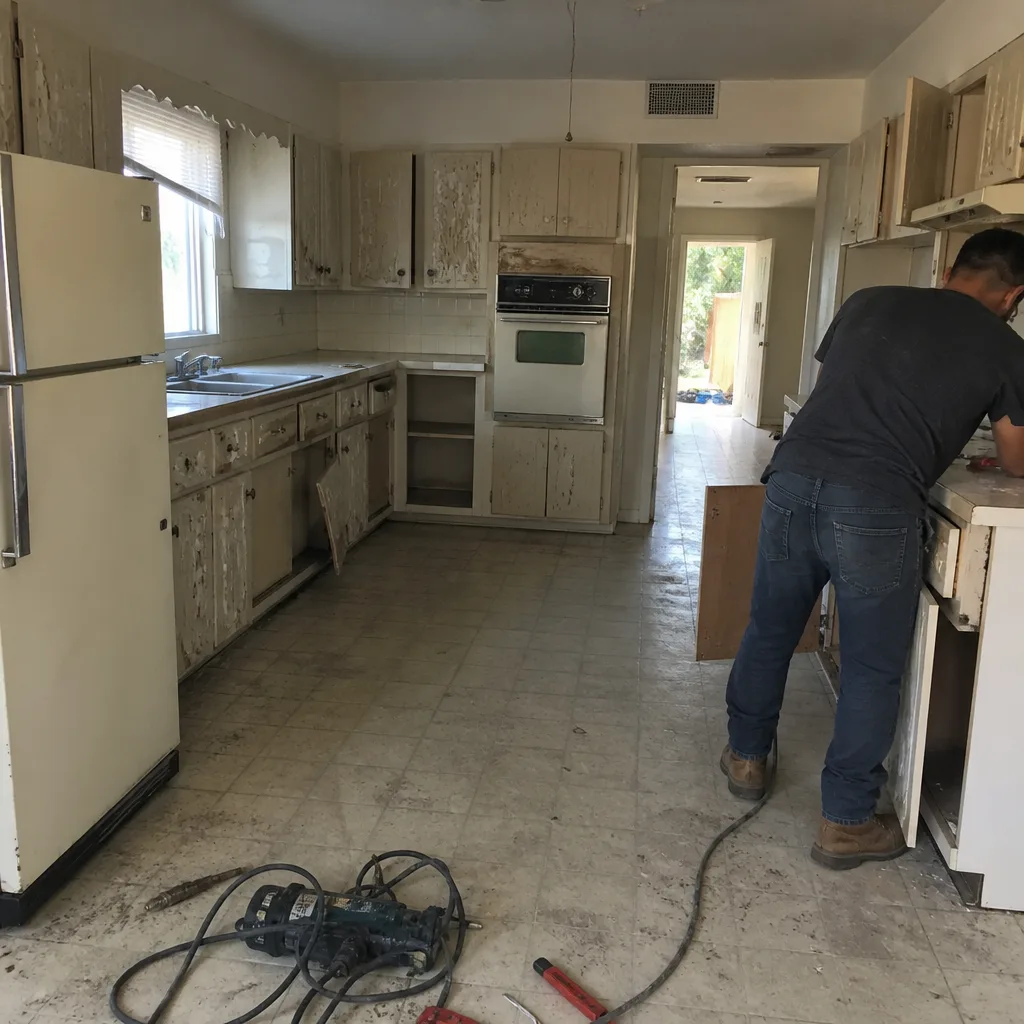 Before
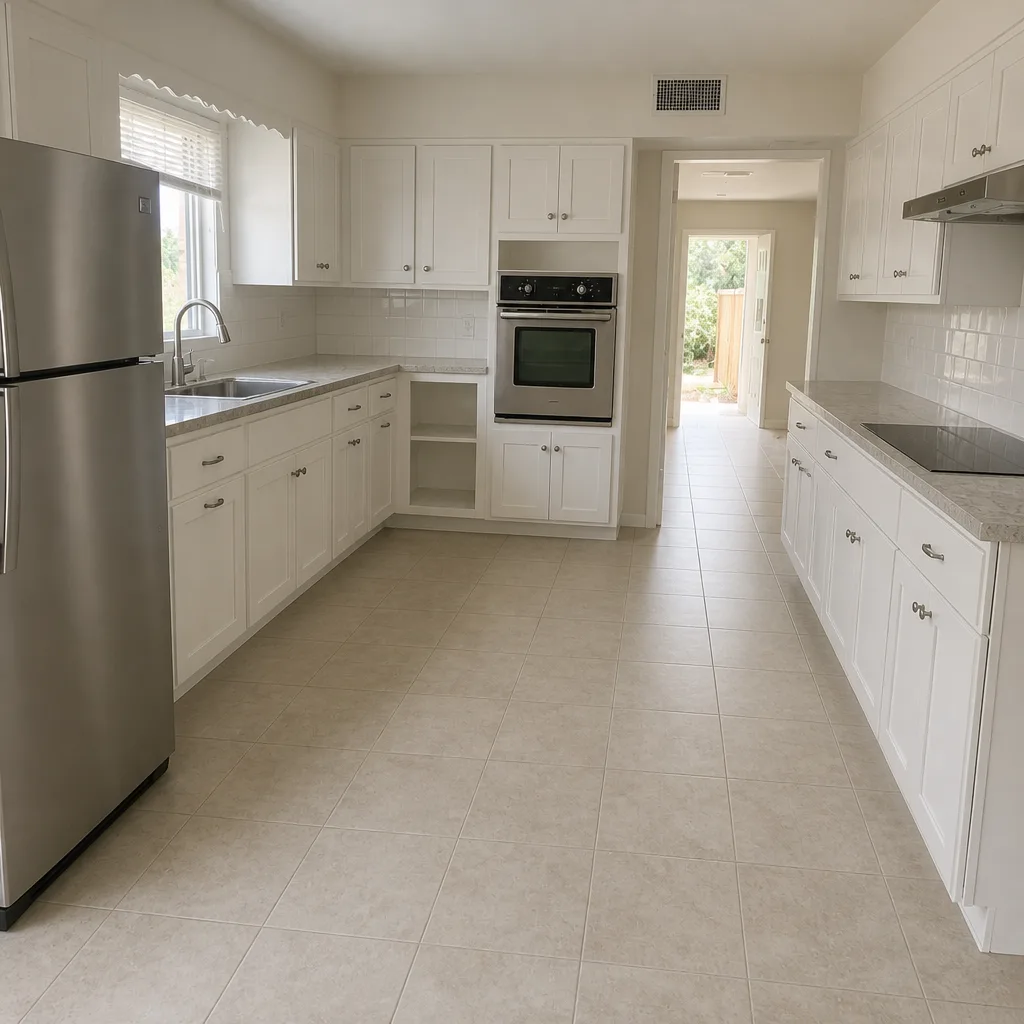 After
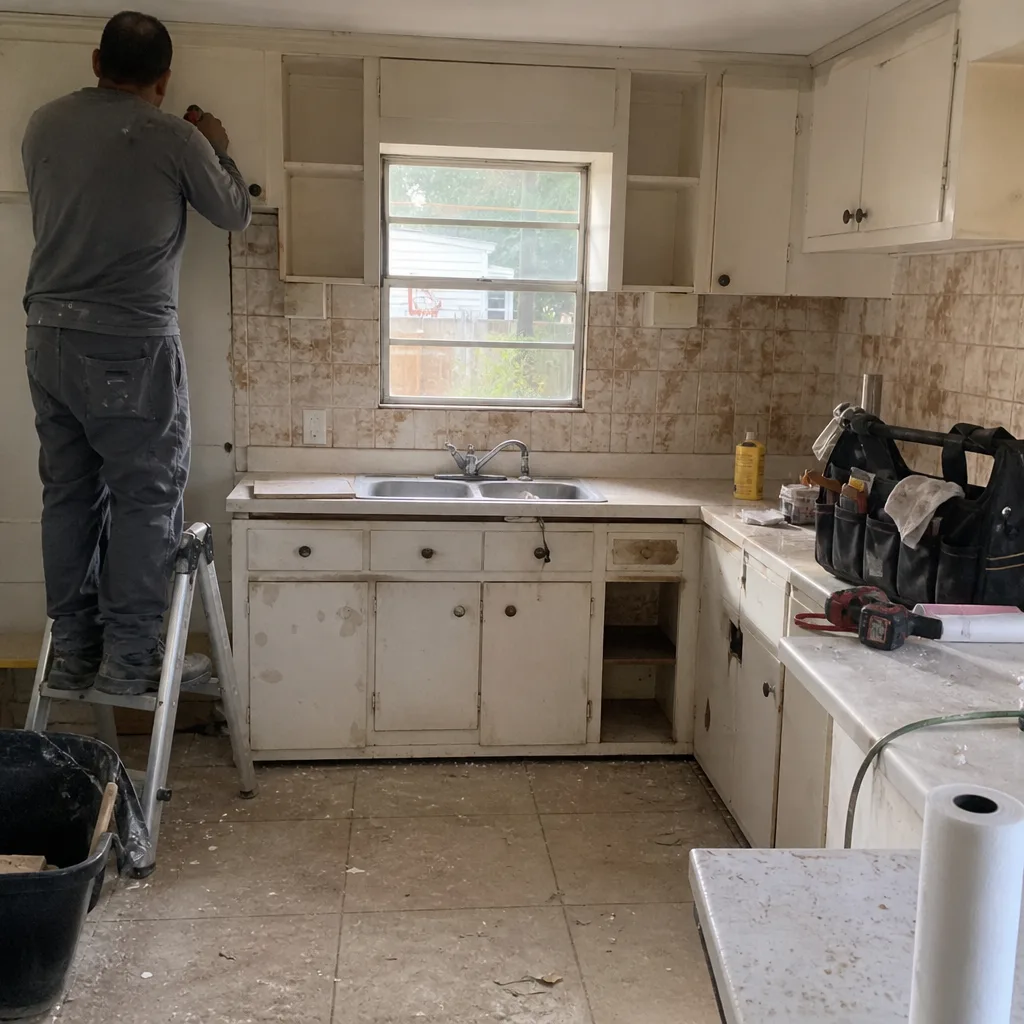 Before
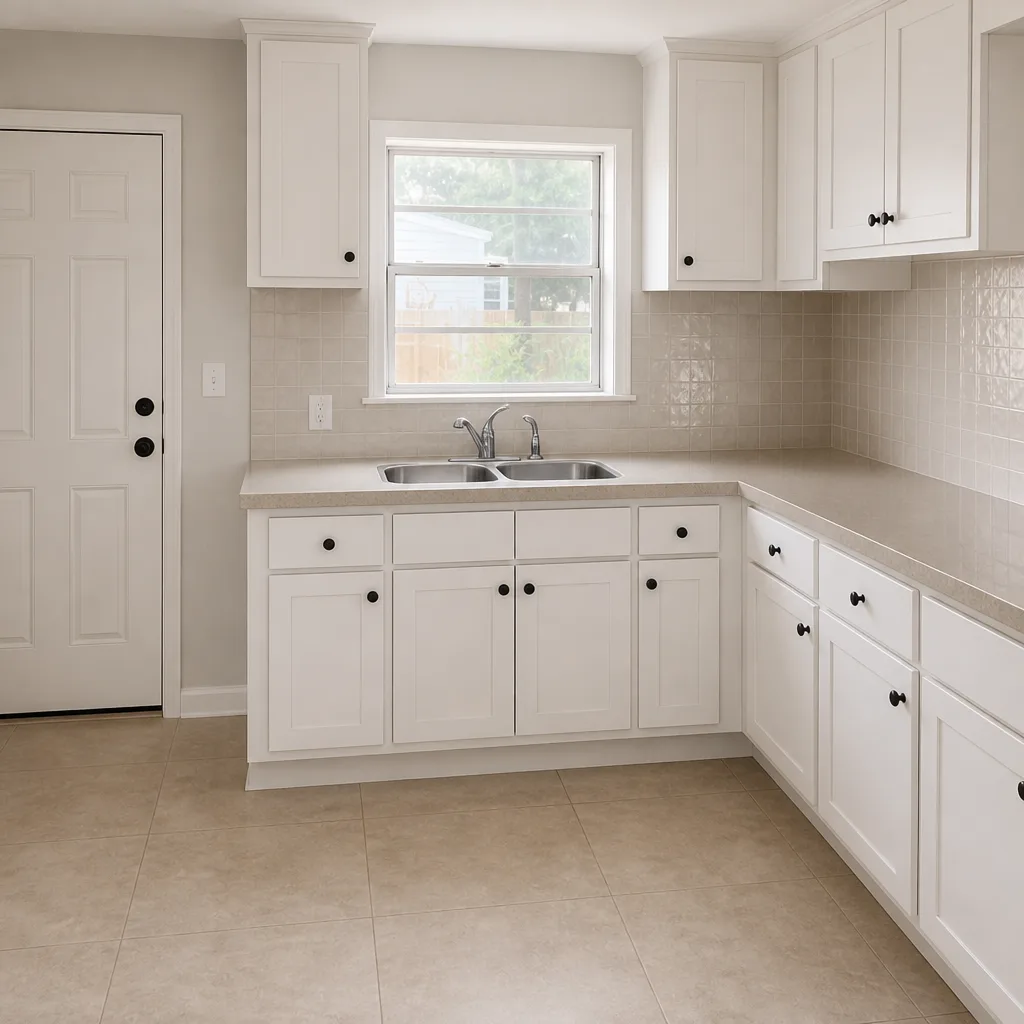 After
Common Mistakes to Avoid
- Assuming “small” means “no permit.” Moving a sink six inches is small. It still triggers a plumbing permit. The size of the job isn’t the threshold – the trade is.
- Skipping the waterproofing membrane in a shower. The tile is waterproof-looking, but the water goes behind it. Cement board alone isn’t enough in Miami-Dade humidity. You need the membrane over it, and that’s what fails first when it’s missing.
- Pulling an owner-builder permit and hiring unlicensed helpers. The owner-builder signature makes you the general contractor under Florida law. The unlicensed worker’s liability is yours, full stop.
- Not disclosing unpermitted work at sale. In Florida, you have a duty to disclose known defects and unpermitted work. Buyers’ lenders will find it during underwriting, and closings die at that exact moment.
- Tying a patio enclosure or screen room into the roof structure without a permit. This is the most common unpermitted-work category we see on North Miami single-family homes, and it’s the one most likely to void a roof claim after a storm.
- Doing your own electrical panel work. Panel work is lethal. There is no DIY version. If someone tells you otherwise, walk away.
- Re-tiling a failed DIY bathroom without fixing the substrate. Same failure, six weeks later. If the substrate (the layer under the tile) is wet or compromised, the tile comes back off.
Frequently Asked Questions
In Florida you can paint interior surfaces, install like-for-like light fixtures on existing boxes, replace finish flooring over an existing slab, hang pre-hung interior doors, and replace cabinet fronts without permits in most cases. Anything that touches structure, electrical circuits, plumbing supply or drains, gas lines, the roof, or the building envelope requires a licensed professional and a permit.
Yes, under Florida Statute 489 you can act as owner-builder on your primary residence, provided you don’t sell or rent it within a year of completing the work. You assume the general contractor’s full liability: pulling every trade permit, scheduling inspections, verifying subcontractor licensing and insurance, and carrying the workers’ comp exposure. Most homeowners underestimate the insurance piece. Call (888) 255-7411 if you want a free estimate on what it costs to hand those tasks to a licensed contractor – the number often surprises people in a good way.
Most permitted kitchen remodels in North Miami run $18,000-$55,000 depending on layout changes, cabinet line, and countertop material. A cosmetic refresh that keeps the layout (paint, cabinet fronts, hardware, like-for-like appliances) lands closer to $3,500-$9,000. The difference is usually layout: moving a sink or a range adds plumbing and electrical work, which adds permits, which adds cost. Call (888) 255-7411 if you want a written number you can hold us to.
Your insurer can reduce or deny the claim on the affected portion, and can exclude the unpermitted work from covered value entirely. Miami-Dade is in the High Velocity Hurricane Zone, so adjusters are thorough and frequently look for permits during claim investigation. If the damage traces back to unpermitted work, you can also face non-renewal at the next policy cycle. Call us at (888) 255-7411 for a free estimate on bringing an unpermitted area up to code before the next storm season.
It can block it, and frequently does. Buyers’ lenders often require unpermitted work to be either permitted retroactively or disclosed and priced into the sale. An open permit on the county record can also prevent a certificate of occupancy on any new addition. Title and underwriting review catch unpermitted work at the worst possible moment. Call (888) 255-7411 if you’re planning to sell in the next few years and want to know what’s on your permit record.
Yes. Every project we take on that requires a permit gets one, and every inspection is scheduled and passed before we sign off. We don’t hand the permit back to the homeowner to manage. That’s part of the written price and the written guarantee. Our work is backed by the 365-Day Done Right Promise: if something fails inside the guarantee window, we come back and fix it at no charge. Call (888) 255-7411 if you want to see how that plays out on a real estimate.
The Bottom Line

The DIY line in North Miami isn’t about whether you’re handy. It’s about whether the job requires a permit, and whether the risk you assume by skipping one is worth the money you save. For painting, like-for-like fixtures, finish flooring, doors, and cabinet fronts, do it yourself – the savings are real. For anything past the permit threshold, the honest math is that the second attempt usually costs more than the first, and the insurance claim you never get paid on costs more than both. Get a written number before any work starts, on any job over a few thousand dollars. That’s the number that stays true from day one to invoice. Call (888) 255-7411 for a free estimate – a live person answers.
Written by the team at Penhallow Remodeling North Miami.