Last updated November 17, 2026







Free written scope consultation - allowances, timeline, and change-order rules on paper before a single trade is scheduled
DIY vs Professional Kitchen Remodeling: What’s Safe to Do Yourself
Painting your own cabinets is a smart weekend project. Moving a load-bearing wall yourself to open up the kitchen is a mistake that an inspector, your insurer, and a future buyer will each find, and each will penalize you for. The line between DIY and professional kitchen remodeling isn’t really about skill level. It’s about which tasks carry permit obligations, inspection requirements, or failure modes that cost more to fix than they saved to attempt. This guide draws that line honestly for North Miami homeowners, including the jobs where a confident amateur genuinely does fine.
Quick Answer
Cosmetic work like painting, cabinet hardware, tile backsplash over sound drywall, and careful demolition of non-structural elements is genuinely safe to do yourself in North Miami. Electrical, plumbing, gas, and any structural wall change require a licensed professional and a Miami-Dade permit by law. The gray zone is the expensive part: waterproofing, substrate prep, and cabinet leveling are technically DIY-legal but statistically cost more to redo than to hire out.
Styles & brands we work with
- Kitchen remodeling
- Bathroom remodeling
- Home additions & ADU
- Roofing
- Windows & doors
- Driveway & pavers
- Fence
Table of Contents
- The three-column breakdown: safe, licensed-only, and expensive-to-redo
- What Miami-Dade County actually requires by law
- The “I’ll do demo myself” plan, honestly assessed
- What’s hiding in older North Miami homes
- The real math: DIY mistake versus professional cost
- How DIY prep affects a contractor’s guarantee
- Where DIY genuinely pays off
- Common mistakes to avoid
The Three-Column Breakdown: Safe, Licensed-Only, and Expensive to Redo
Most DIY-versus-hire advice lumps everything into two buckets. That’s the wrong frame and it’s why homeowners get burned. There are really three categories, and the middle one is where the law gets involved.
Column 1: Genuinely DIY-safe in North Miami
- Painting cabinets and walls (prep and priming matter more than the paint)
- Swapping cabinet hardware, drawer pulls, and knobs
- Installing a tile backsplash over sound, dry drywall
- Replacing a faucet on existing supply lines (shut the water off first)
- Removing non-structural shelving, old appliances, and surface trim
- Hanging open shelving into studs
- Caulking, grouting touch-ups, and paint-grade trim
Column 2: Licensed professional required by Florida law
- Any new or relocated electrical circuit, outlet, or dedicated appliance line
- Moving or adding plumbing supply or drain lines
- Gas line work of any kind (range, cooktop, water heater relocation)
- Removing or altering any load-bearing wall
- Changing a window or door opening in an exterior wall
- Adding or relocating a range hood that vents through the roof or wall
Column 3: Technically DIY-legal, statistically expensive to redo
- Waterproofing a wet area behind a sink or under a dishwasher
- Backer board and substrate prep for tile or stone counters
- Cabinet leveling and shimming on an out-of-plumb wall
- Countertop template prep and edge support
- Underlayment flattening before flooring goes down
That third column is the one that costs North Miami homeowners the most money. Nothing in it is illegal. All of it fails quietly and shows up six months later as a crack, a soft spot, or a cabinet door that won’t close.
What Miami-Dade County Actually Requires by Law
Florida law and Miami-Dade County code are specific about who can do what. Ignoring this isn’t just a permit problem; it can void your homeowner’s insurance and complicate a future sale. Here’s what actually requires a licensed sub-contractor to pull a permit in this county:
- Electrical: Any new circuit, panel change, or relocation of an outlet or appliance feed requires a licensed electrical contractor to pull an electrical permit. Replacing a light fixture on an existing switch leg typically does not.
- Plumbing: New supply lines, drain relocations, and sink or dishwasher hookups that change the rough-in require a licensed plumber and a plumbing permit. Swapping a faucet on existing shut-offs is generally exempt.
- Gas: All gas work requires a licensed contractor. There is no homeowner exemption in Miami-Dade for gas line modifications, period.
- Structural: Any wall removal or opening change requires signed and sealed plans from a Florida-licensed engineer or architect, plus a building permit and inspections.
- Mechanical: Range hoods venting through an exterior wall or roof, and any HVAC relocation, require a mechanical permit.
Permits get inspected in sequence – rough-in first, then insulation, then final. If a homeowner pulls their own permit for work that legally requires a licensed contractor, the county can reject the final inspection and require the work be opened up and redone. That’s the scenario that turns a $2,000 electrical relocation into a $9,000 tear-out. Our general contractor in North Miami team pulls and manages these permits on every project so this never lands on you.
The “I’ll Do Demo Myself” Plan, Honestly Assessed
Demo sounds like the easy money-saving move. Sometimes it is. Sometimes it’s where the surprise bill starts.
Safe to demolish yourself: cabinet doors and boxes (after the countertop is off and utilities are disconnected), old appliances, surface-mounted shelving, non-structural soffits that you’ve confirmed are hollow, and worn flooring you plan to replace anyway.
Do not touch: any wall you haven’t confirmed is non-load-bearing, anything containing asbestos, and any plumbing or electrical you can’t see clearly. If you’re unsure whether a wall is structural, that’s not a judgment call to make with a sledgehammer – it’s a call for an engineer.
Here’s how to verify which is which before you start:
- Check the original building plans or permit history at Miami-Dade County’s building department. Older North Miami homes often have plans on file.
- Look for a double top plate, diagonal bracing, or a wall that runs perpendicular to ceiling joists – all signals of a load-bearing wall.
- Test suspect materials for asbestos before disturbing them. This is the one step people skip and regret.
- Confirm utilities are off at the breaker and the main water shut-off before any demo begins.
- Get a licensed engineer’s read on anything structural. It’s a few hundred dollars and it saves a five-figure mistake.
What’s Hiding in Older North Miami Homes
North Miami has a lot of housing stock from the 1950s through the 1970s, and that changes the DIY calculus in ways a generic guide won’t tell you. If your home was built before 1980, treat any vinyl floor tile, mastic adhesive, popcorn ceiling, or textured drywall patch as a possible asbestos-containing material until testing says otherwise. Disturbing it during DIY demo creates a health hazard and a remediation bill that dwarfs whatever you saved.
The local climate matters too. North Miami’s humidity and seasonal storms mean the wall cavity behind your kitchen cabinets takes on moisture in ways a dry-climate guide ignores. We regularly see soft drywall and deteriorated substrate behind old backsplashes near exterior walls – and that’s before the homeowner starts prying. If you pull a backsplash and the drywall behind it crumbles, stop and call. That’s a substrate problem, not a cosmetic one.
Cast-iron drain lines are another one. A lot of older North Miami kitchens still have them, and they’re often at the end of their service life. A homeowner doing demo on their own can crack one without realizing until the sink backs up a week later. Our kitchen remodeling in North Miami projects start with a look at what’s behind the walls before anyone swings a hammer.
The Real Math: DIY Mistake Versus Professional Cost
This isn’t a scare tactic. It’s a decision tool. Here’s what the numbers actually look like for a typical North Miami kitchen, so you can decide where the math favors hiring out.
- Moving a load-bearing wall: engineer’s plans and structural permit – $1,500 to $3,500. Doing it without a permit and getting caught at resale or inspection – often $10,000 to $25,000 to remediate, plus disclosure headaches.
- Electrical for a new island: licensed electrician and permit – $900 to $2,200. DIY and failed final inspection – $3,000 to $6,000 to open walls and redo.
- Tile backsplash done yourself: $200 in materials and a weekend. If it holds, you saved $600 to $1,400 in labor. If it fails on bad substrate, $1,200 to $2,500 to tear out and redo.
- Cabinet painting: $150 to $400 in quality paint and prep supplies versus $1,800 to $4,500 professional. High DIY payoff if you do the prep right.
- Countertop installation: Cambria, Silestone, or Caesarstone quartz runs $55 to $95 per square foot installed. This is not a DIY category; template, fabrication, and edge work require equipment and experience.
- Cabinet installation: KraftMaid or Wellborn cabinetry installed professionally typically runs $4,000 to $14,000 installed depending on the line. Leveling and shimming on an out-of-plumb North Miami wall is where DIY cabinet installs fail most.
Notice the pattern: the math strongly favors hiring out wherever a permit, inspection, or permanent installation is involved. It favors DIY wherever the worst-case failure is cosmetic and reversible. When you’re weighing bids, our post on bathroom remodeling in North Miami shows the same logic applied to a different room if you want a second reference point.
How DIY Prep Affects a Contractor’s Guarantee
This is the part almost no guide covers, and it’s the most important thing to understand before you decide to “prep the room” yourself and hand it off. A written workmanship guarantee, like our 365-Day Done Right Promise, covers the work we perform and the materials we install. It cannot cover a substrate a homeowner built. Nobody can promise the tile won’t crack if the backer board underneath wasn’t installed to spec.
In practice, when a homeowner has already prepped a wet area or built out a substrate, any honest contractor has two choices: decline the finish work entirely, or document the condition in writing and exclude it from the workmanship guarantee. That’s not a technicality. Substrate failure is the number-one cause of tile and counter failures we’re called to fix.
So the practical rule is this: if you want the finish work covered by a written guarantee, let the professional own everything from the studs out. If you want to prep, that’s fine – but be upfront about it, and understand what it means for the paperwork before work starts. Our Penhallow Remodeling North Miami home page lays out how we handle written pricing and written guarantees up front, so you know exactly what’s covered and what isn’t before day one.
Where DIY Genuinely Pays Off
We mean this. A lot of what makes a kitchen feel finished doesn’t require a licensed trade and doesn’t risk a failure that costs more than it saved. Painting cabinets with a proper bonding primer and a quality enamel is real work, but a careful homeowner can do it well for a fraction of the $1,800 to $4,500 a pro would charge – and if it fails, you strip and repaint, which costs a weekend and a can of paint.
Swapping hardware, hanging open shelving into studs, installing a floating shelf above a coffee station, painting walls and trim, caulking the backsplash seam, and updating light switch plates are all safe, reversible, and satisfying. Even light demo of appliances and old cabinet boxes (once countertops are off and utilities are disconnected) is fine if you’ve confirmed nothing structural or hazardous is involved.
Here’s the test: if the worst-case outcome is cosmetic and reversible, DIY is a reasonable bet. If the worst-case outcome involves an inspector, an insurer, or a future buyer finding a problem, hire it out. That single filter will spare you most of the expensive mistakes we’re called to unwind.
Common Mistakes to Avoid
- Pulling a permit for licensed-only work. Miami-Dade won’t pass a final inspection on electrical or plumbing work a homeowner pulled when a licensed contractor was required. It costs more to undo than to have hired out from the start.
- Demolishing a wall without confirming it’s non-structural. A double top plate or diagonal bracing means stop. This is the single most expensive DIY error we see in North Miami kitchen projects.
- Skipping asbestos testing in a pre-1980 North Miami home. Disturbing vinyl tile, mastic, or textured drywall creates a health hazard and a remediation bill that dwarfs any savings.
- Prepping your own substrate and expecting it to be covered by a workmanship guarantee. It can’t be, and no honest contractor will promise otherwise. Tell your contractor what you’ve done before they start.
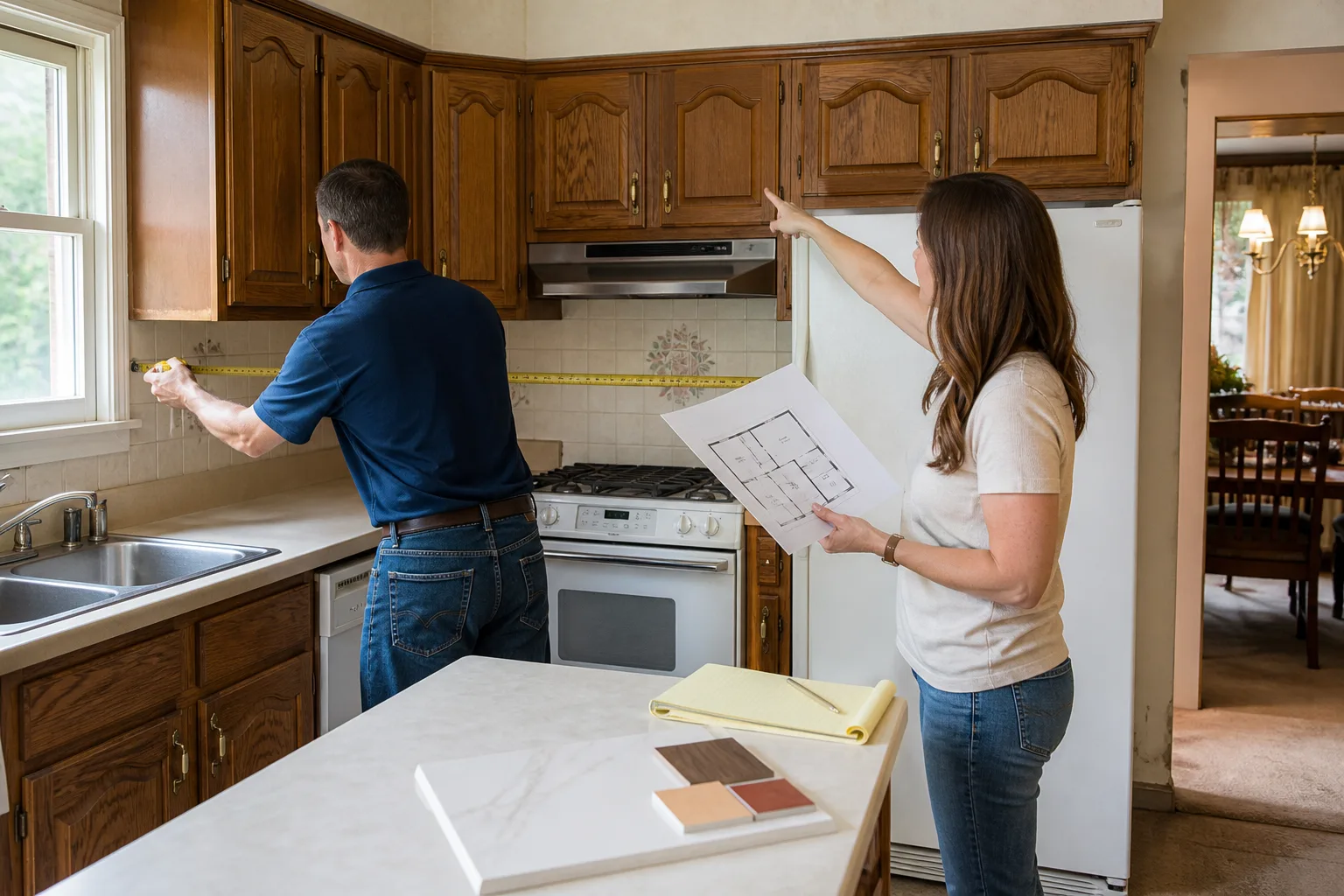
- Buying cabinets before the room is measured. Out-of-plumb walls in older North Miami homes mean nominally “standard” cabinet dimensions frequently need adjustment. Measure twice, order once.
- Disconnecting plumbing or gas to “move it a little.” Even a small relocation changes the rough-in and requires a licensed plumber. A DIY gas connection is a genuine safety hazard – leave it to a licensed contractor.
- Assuming the cheapest bid is the same scope. If one bid excludes permits and another includes them, you’re not comparing the same job. Get written, line-itemed pricing so you can compare accurately.
See the difference
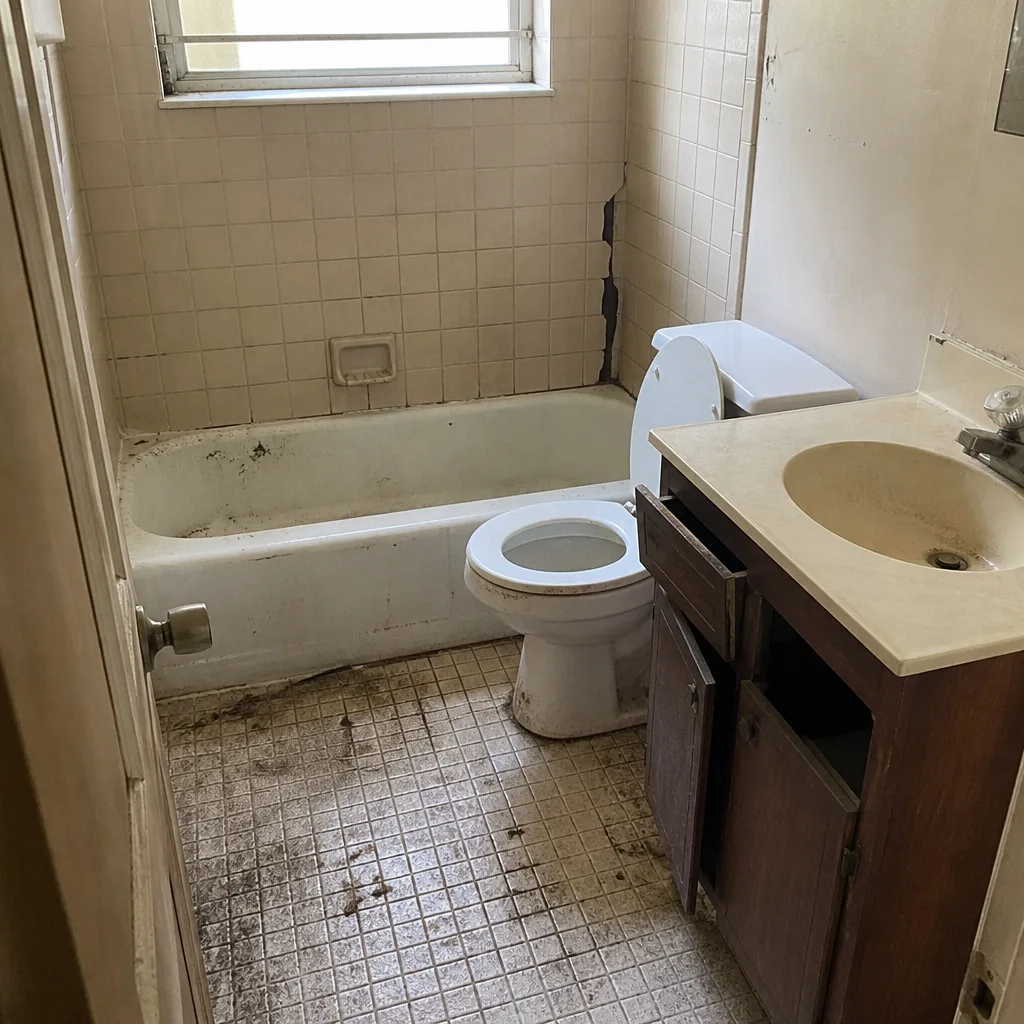 Before
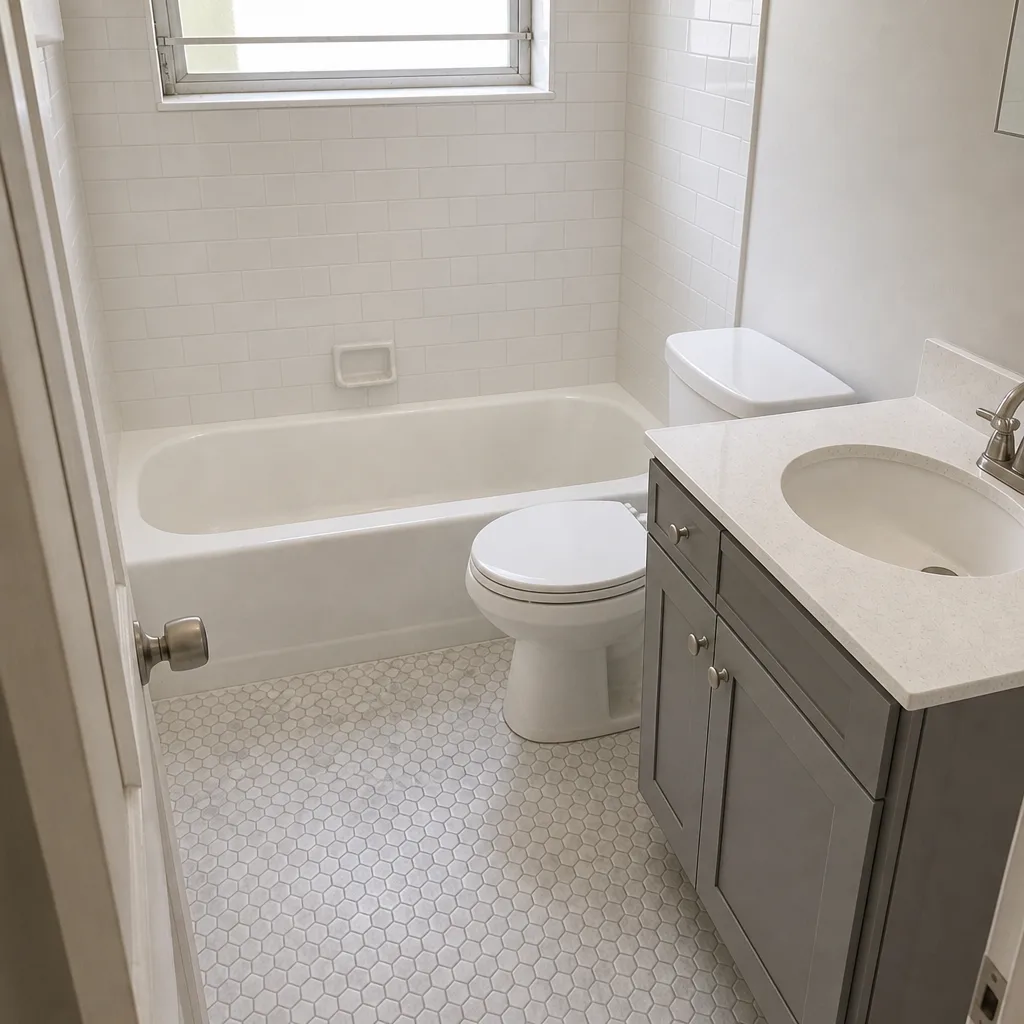 After
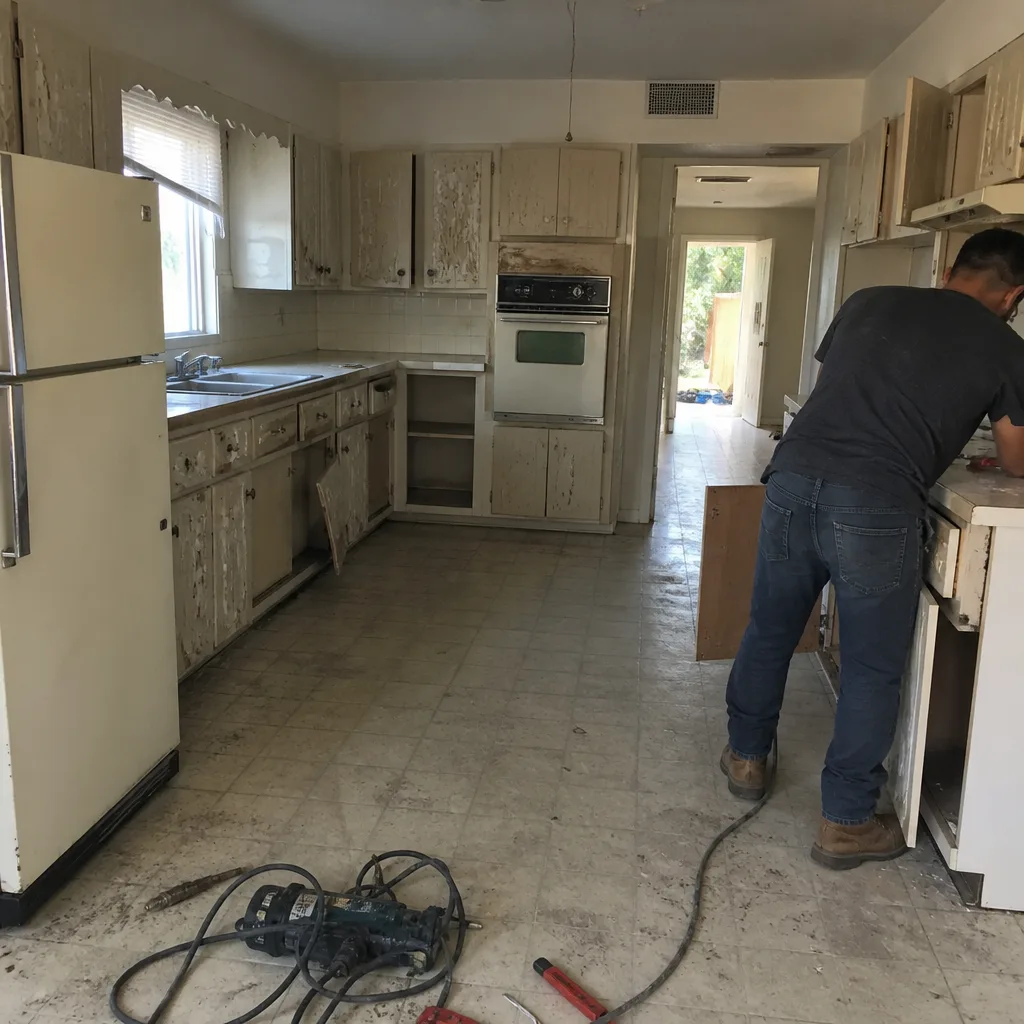 Before
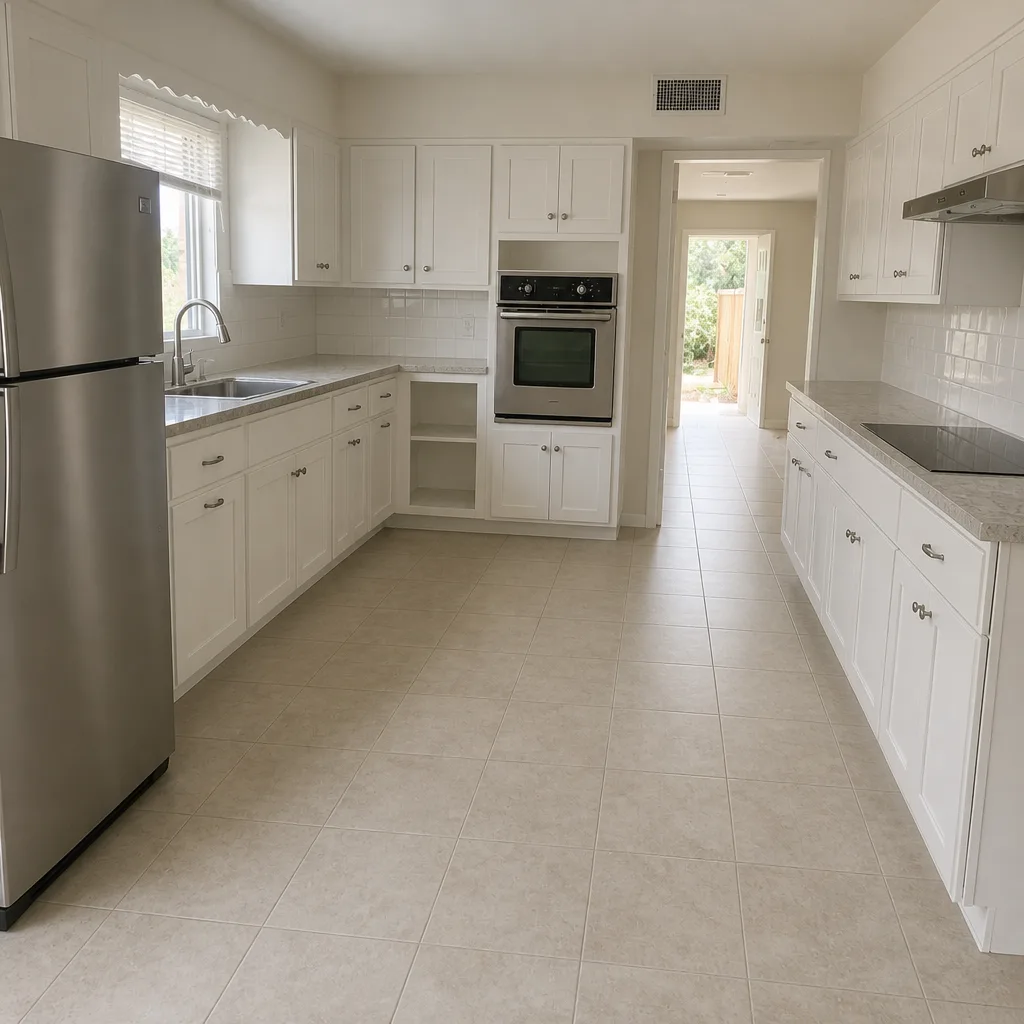 After
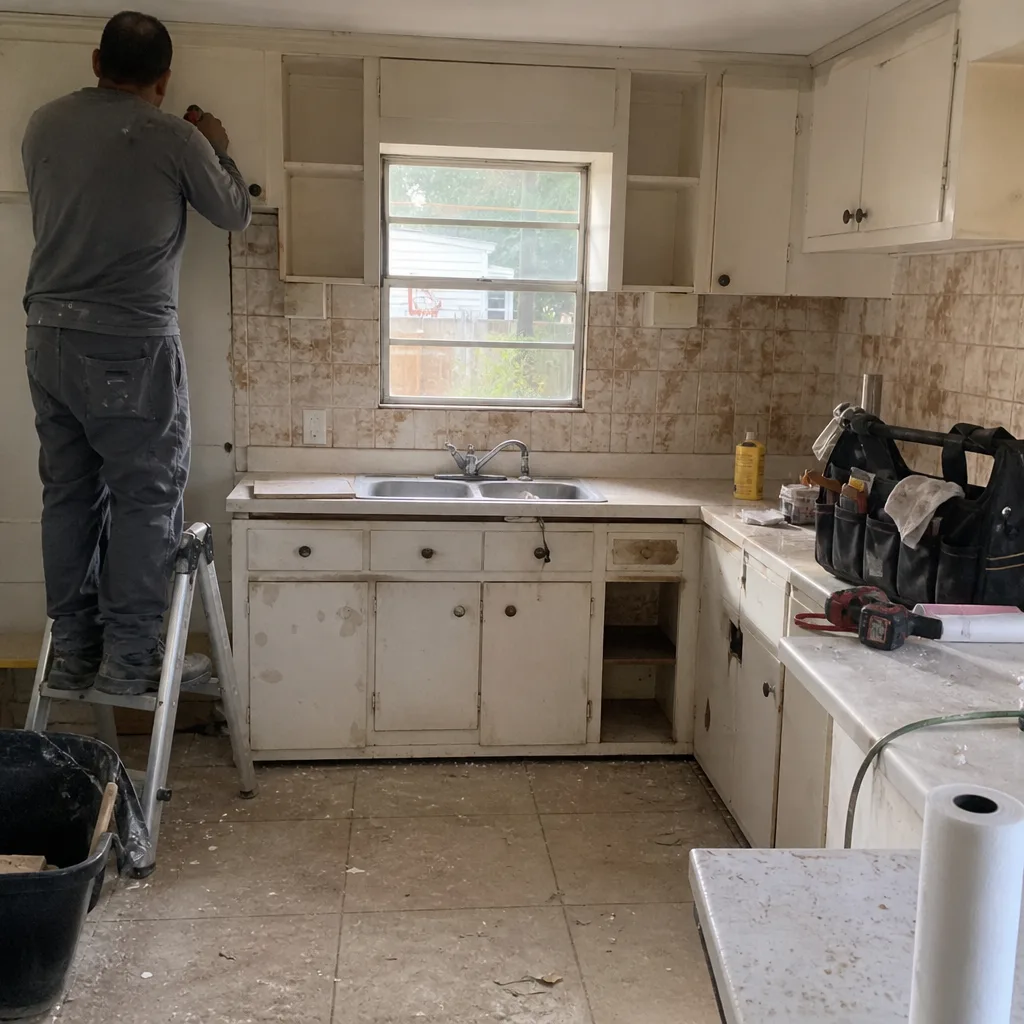 Before
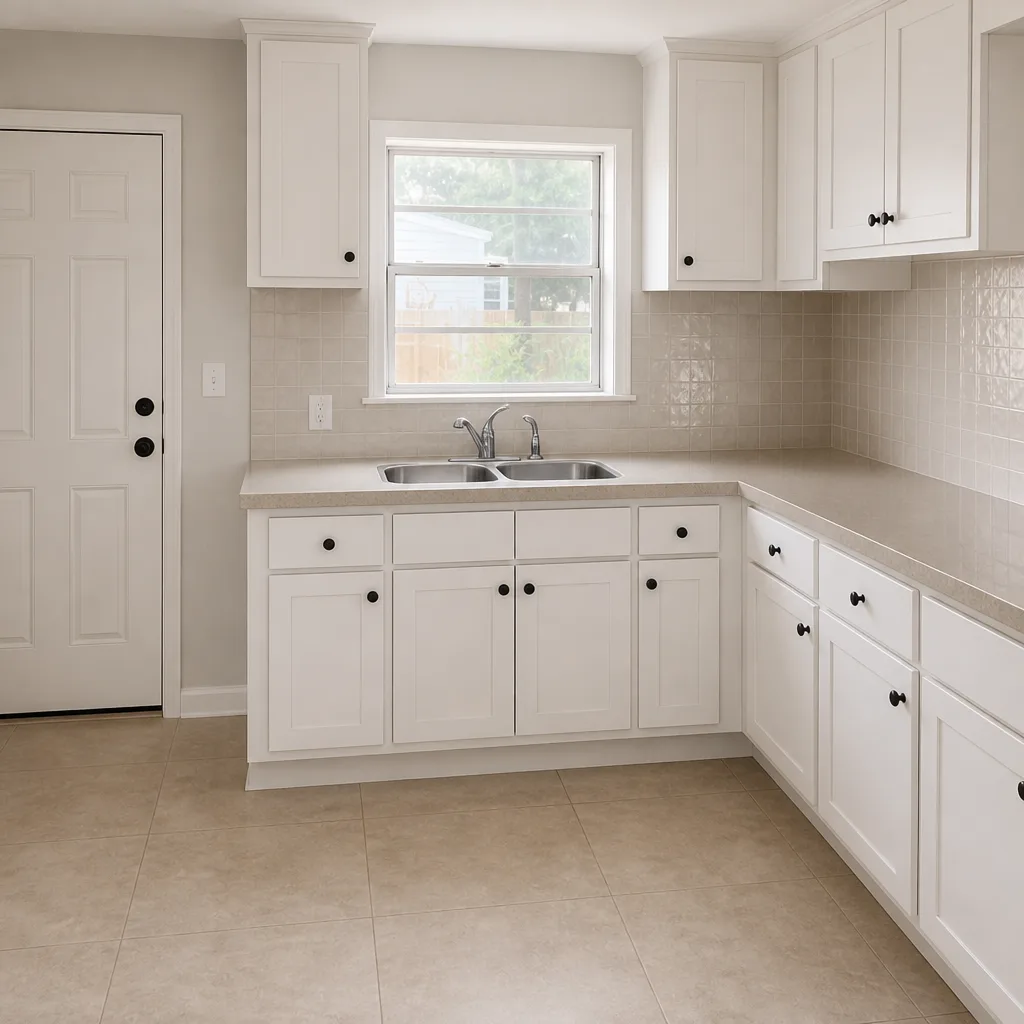 After
When to Call a Professional
Call a licensed professional the moment any of these are true: you want to move or remove a wall, you’re adding or relocating electrical or plumbing, there’s gas involved, your home was built before 1980 and you’re about to disturb flooring or ceiling texture, or you’ve pulled back a surface and found soft drywall or a cracked drain. Any of those is a stop-and-call moment. A general contractor is also the right call when the scope has more than three trades in it – coordinating electrical, plumbing, cabinetry, countertops, and finish work yourself is where projects slip months and budgets blow past the written number. Penhallow Remodeling North Miami offers free estimates in North Miami – call (888) 255-7411 to schedule yours and get a written price before any work starts.
Frequently Asked Questions

You can legally do cosmetic work yourself in North Miami: painting, cabinet hardware, tile backsplash over sound drywall, non-structural demo, and faucet swaps on existing shut-offs. New or relocated electrical, plumbing, gas, and any structural change require a licensed contractor and a Miami-Dade permit. Call (888) 255-7411 if you’re unsure which category your project falls into – estimates are free.
Yes, if what you’re removing is non-structural and confirmed free of asbestos. Safe demo includes cabinet doors and boxes after the countertop is off and utilities are disconnected, old appliances, and surface shelving. If the home was built before 1980, test suspect materials before disturbing them. For a specific read on your kitchen, call (888) 255-7411.
You need a permit any time the work involves electrical, plumbing, gas, or structural changes – which covers most full kitchen remodels in Miami-Dade. Cosmetic work like paint, hardware, and a backsplash over existing drywall generally doesn’t require one. When in doubt, the county building department can confirm before you start. Call (888) 255-7411 for a free estimate and permit guidance.
Usually not. A written workmanship guarantee covers the contractor’s own work and materials; it can’t cover a substrate a homeowner built. Any honest contractor will document the pre-existing condition and exclude it from the guarantee in writing. That’s exactly what our free estimate covers – a written price and a written scope before work begins. Call (888) 255-7411 to schedule.
Doing the cosmetic work yourself (paint, hardware, backsplash) might save $2,500 to $6,000 off a typical North Miami kitchen remodel, but skipping permits on licensed-only work costs far more to remediate. A full remodel with cabinets and quartz counters typically runs $18,000 to $55,000. Call (888) 255-7411 for an exact quote – estimates are free.
Unpermitted work found at resale in Miami-Dade typically means a buyer’s inspector flags it, the sale stalls or the price drops, and the seller pays to open up and correct the work – or to permit it retroactively if possible. It’s the most expensive way to find out a permit was required. Call (888) 255-7411 before you start, not after.
The Bottom Line
The DIY-versus-hire decision in kitchen remodeling is about failure cost, not confidence. Cosmetic, reversible work – paint, hardware, backsplash over sound drywall, light non-structural demo – is genuinely worth doing yourself and can save $2,500 to $6,000 on a North Miami kitchen. Electrical, plumbing, gas, and any structural change belong to a licensed professional with a Miami-Dade permit. And the gray zone – substrates, waterproofing, cabinet leveling – is where DIY quietly costs more than it saved. Draw the line at permits and permanent work, and you’ll keep the savings without inheriting the risk.
If you’re ready to price the professional side of your project, our Kitchen Remodeling in North Miami page and our Bathroom Remodeling in North Miami guide both walk through written pricing and guarantees in detail. And when you’ve measured, budgeted, and decided what to keep and what to hand off, call (888) 255-7411 to schedule your free estimate with Penhallow Remodeling North Miami. We’ll give you a written price before any work starts, a real arrival window, and a 365-Day Done Right Promise that puts the guarantee in writing where you can hold us to it.
Written by the team at Penhallow Remodeling North Miami.