Last updated November 17, 2026






Free written scope consultation - allowances, timeline, and change-order rules on paper before a single trade is scheduled
Seasonal Construction Care for North Miami: Year-Round Homeowner’s Guide
June 1 isn’t just the first day of hurricane season. It’s also roughly the day most South Florida contractors stop taking on new storm-prep work, because their schedules are full through the summer. The homeowners who aren’t scrambling in late May made their call in February. That single timing gap explains why two houses on the same block – one that sails through a named storm and one that’s filing an insurance claim by July – can look identical from the street. This guide walks you through the North Miami construction calendar as it actually works: what to do from January through May, what to do before and after a storm, and how the dry season and the humid season each shape what’s realistic to build. You’ll finish with a month-by-month picture you can act on.
Quick Answer
North Miami runs on two seasons, not four: hurricane season (June through November) and the drier stretch from November through April. Schedule structural work, roof inspections, impact-window checks, exterior paint and stucco repair in the dry window, and protect the building envelope before June 1. Interior remodeling can happen year-round, but humidity controls (acclimation, drying time, dehumidification) decide whether the finished job holds or fails.
Styles & brands we work with
- Kitchen remodeling
- Bathroom remodeling
- Home additions & ADU
- Roofing
- Windows & doors
- Driveway & pavers
- Fence
Table of Contents
- The North Miami Seasonal Construction Calendar
- Pre-Season Construction Checklist (January – May)
- Why the Dry Season Is Your Exterior Window
- How Humidity Changes Interior Remodel Timelines
- After a Storm: What to Document Before You Touch Anything
- The Inspections South Florida Homeowners Skip
- Common Mistakes to Avoid
- When to Call a Professional
The North Miami Seasonal Construction Calendar

Most of the country plans construction around frost and thaw. North Miami plans around wind and rain. Understanding that shift is the whole game. Here’s how the year actually breaks down for a homeowner in North Miami.
- January – March: The quiet window. Contractors have room on the schedule, permits move faster, and the air is dry enough for exterior work to cure properly. This is when you book roof inspections, impact-opening checks and drainage clearing.
- April – May: Last call before the first named storm. Get the envelope sealed, the drainage cleared and the impact glass verified. Anything not finished by late May is a gamble.
- June – November: Hurricane season. Exterior work slows, interior work continues with tight humidity control. This is the window for kitchens, bathrooms and interior finish work.
- November – April: The dry season. This is when exterior paint, stucco repair and waterproofing cure cleanly, which is why reputable crews push those jobs into this stretch.
One thing we’ve learned from working across North Miami: the homeowners who treat this calendar as a hard schedule file insurance claims less often and spend less on emergency repairs. The ones who treat it as optional end up calling in a panic in August, when nobody has room.
If you’re planning structural work at all this year, the General Contractor in North Miami page walks through what a legitimately scheduled project looks like from start to finish.
Pre-Season Construction Checklist (January – May)
Every item below should be done by May 31. Some are simple verifications you can do yourself; others require a licensed professional. The point is not to become an amateur roofer – it’s to know the state of your home before the first named storm of the season.
- Roof inspection. Look for lifted shingles, cracked sealant around penetrations and any soft spots. If your roof is past 15 years old, have a licensed roofer inspect it – not a general handyman. Wind-driven rain finds every gap.
- Impact opening verification. Confirm every window and door carries a current impact rating or has an approved shutter system. If you installed impact windows in North Miami through ES Windows, ECO Window Systems, CWS or CGI, verify the labels and any product documentation you still have. Missing paperwork can complicate an insurance claim.
- Drainage clearing. Clear gutters, downspouts and yard drains. In a storm, the volume of water off an unmaintained gutter can breach a wall faster than wind does.
- Exterior seal check. Walk the perimeter and look for cracks at windows, doors, and where the stucco meets trim. Small exterior cracks grow in wind and let water in.
- Attic and soffit check. Look for water staining on rafters and loose soffit panels. A loose soffit can peel off in wind and open the roof structure.
- Garage door track and panel check. Garage doors fail first in high wind. Confirm the door is rated for the wind zone and the brackets are secure.
- Backup power. If you rely on a generator or battery backup for medical equipment or a sump pump, service it in March – not June.
Book these checks starting in January. By April, the good inspectors in North Miami are already booked through summer, and by June they’re out of capacity.
Why the Dry Season Is Your Exterior Window

Exterior paint and stucco repair need to cure, not just dry on the surface. In North Miami’s dry season, which usually runs November through April, the humidity drops enough for a proper cure. Paint that skins over in a humid May can trap moisture underneath and fail within a year. Stucco that’s applied in a humid stretch may look fine on day one and start developing hairline cracks by the following summer.
What that means in practical terms:
- Exterior paint: schedule between November and March. Two coats, proper primer, and a full cure window before the wet season returns.
- Stucco repair: patch, cure and finish during the dry window so the surface can dry uniformly. Repairs done in July often need to be redone by December.
- Waterproofing: sealants, membranes and exterior caulking all cure chemically, not just physically. Working above roughly 80% humidity shortens their lifespan.
- Roof coatings: elastomeric and reflective roof coatings need a dry surface and dry weather for a full cure cycle.
The other benefit: dry-season pricing tends to be more predictable because contractors aren’t competing for storm-repair labor. That doesn’t mean cheap – it means a written quote in February is more likely to reflect the actual cost of doing the work well than a rushed verbal estimate in June.
For interior and exterior finish projects, the Kitchen Remodeling in North Miami page shows how we sequence finish work around the dry window, and where that overlaps with the interior jobs best left for summer.
How Humidity Changes Interior Remodel Timelines
Interior remodeling in North Miami is possible year-round, but the schedule has to respect humidity. The three areas where this matters most:
Flooring acclimation
Wood and engineered flooring needs to sit in the room it will be installed in long enough to absorb or release moisture until it stabilizes with the ambient air. In North Miami, where indoor humidity can sit at 60% or higher in the summer, that acclimation can take longer than it does in a drier climate. A crew that skips acclimation and installs the floor the day it arrives can hand you a floor that cups or gaps by fall. We won’t start a wood floor install without a full acclimation period, and any contractor who wants to rush it is telling you something about their process.
Drywall mud drying
Joint compound in a humid house can take twice as long to dry between coats. That means a kitchen or bathroom remodel scheduled for a tight two-week turnaround in July may stretch to three. A reputable crew will build in drying time rather than force it with heat guns. If a contractor promises a finish date in August that matches what they quoted in February, ask how they plan to control humidity.
Cabinet installation
Solid wood cabinetry – the KraftMaid and Wellborn lines we install, for example – moves with humidity. Cabinets installed in a house with the AC off for extended periods will close tight, then stick in the summer. Keeping the house conditioned during install and for the first weeks after prevents most of this.
Choose the window. Flooring in the dry months, cabinetry during the summer with AC running, and drywall finishing whenever the schedule allows a proper drying cycle. Every interior project is a humidity decision whether the contractor treats it that way or not.
Bathroom remodels are especially sensitive to humidity because of the moisture source. The Bathroom Remodeling in North Miami page covers vapor barriers and waterproofing in more detail than fits here.
See the difference
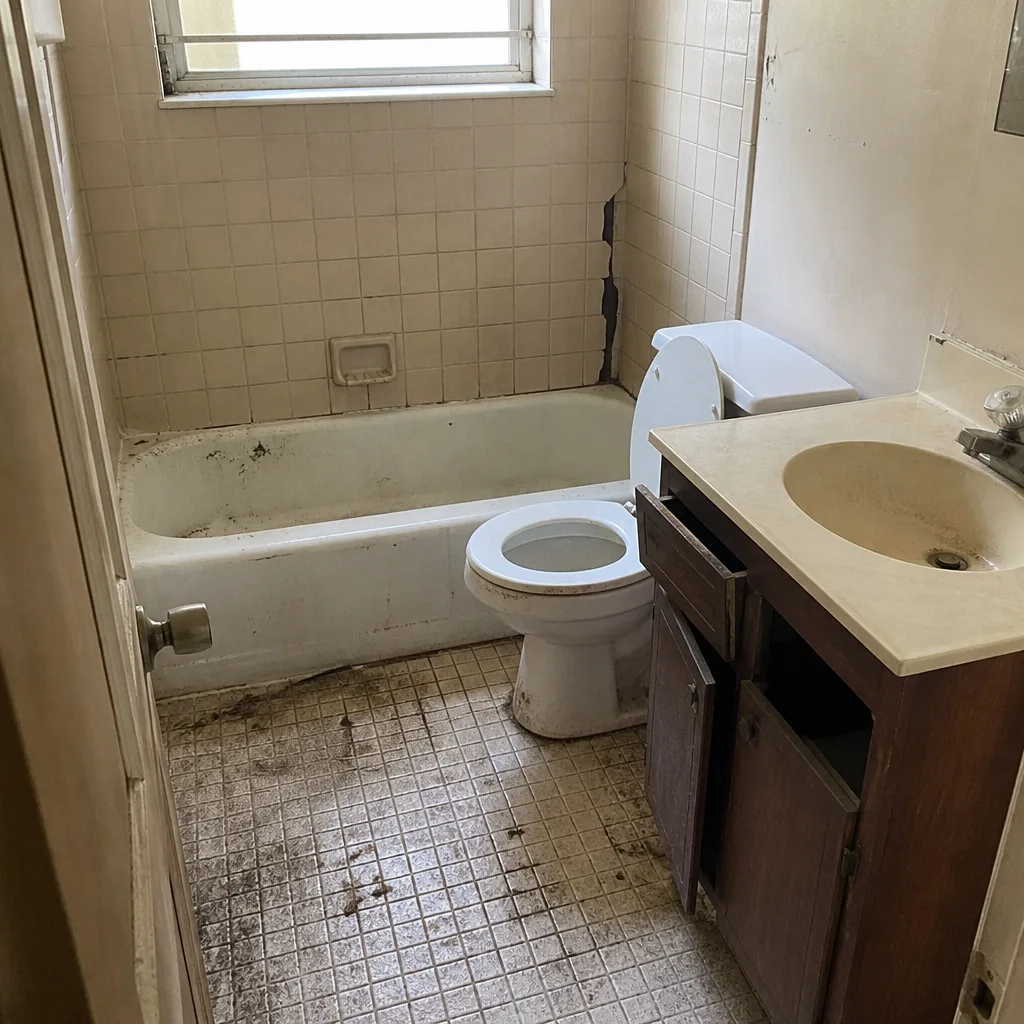 Before
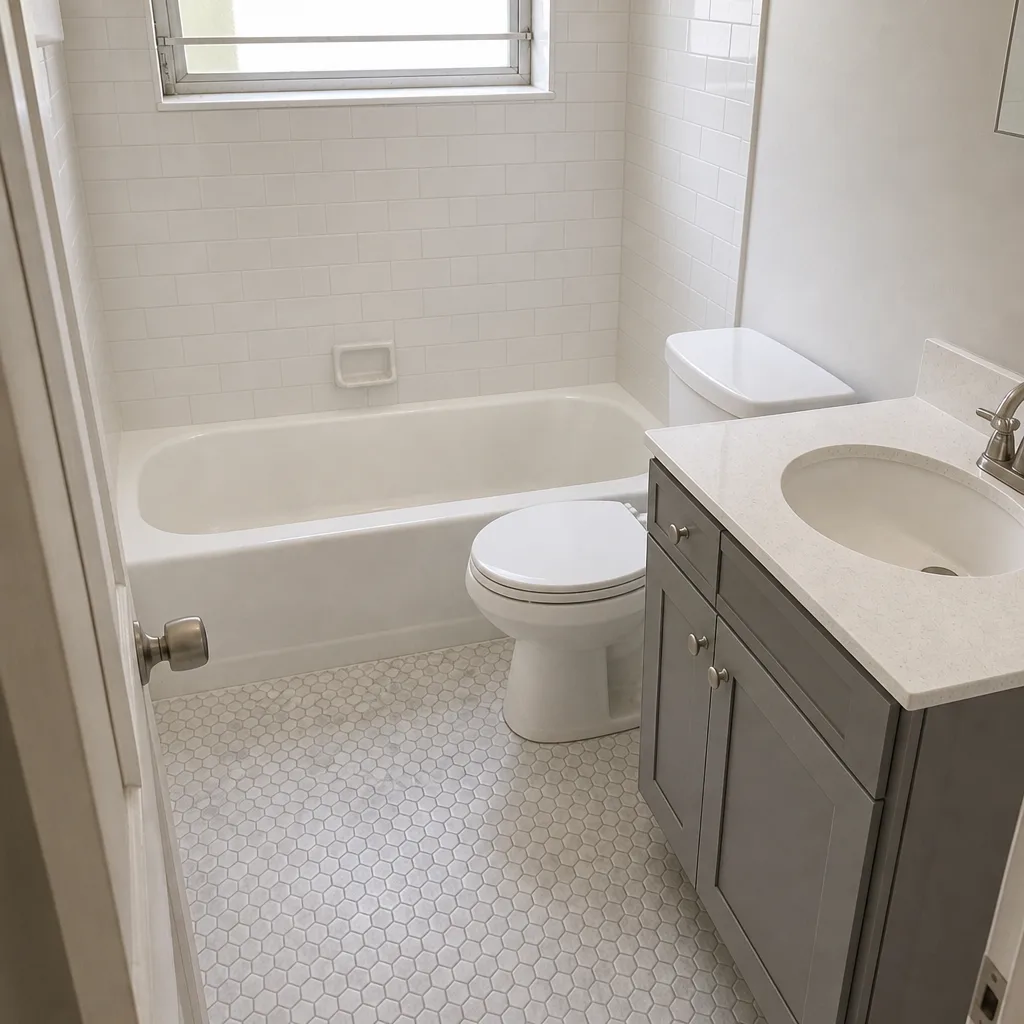 After
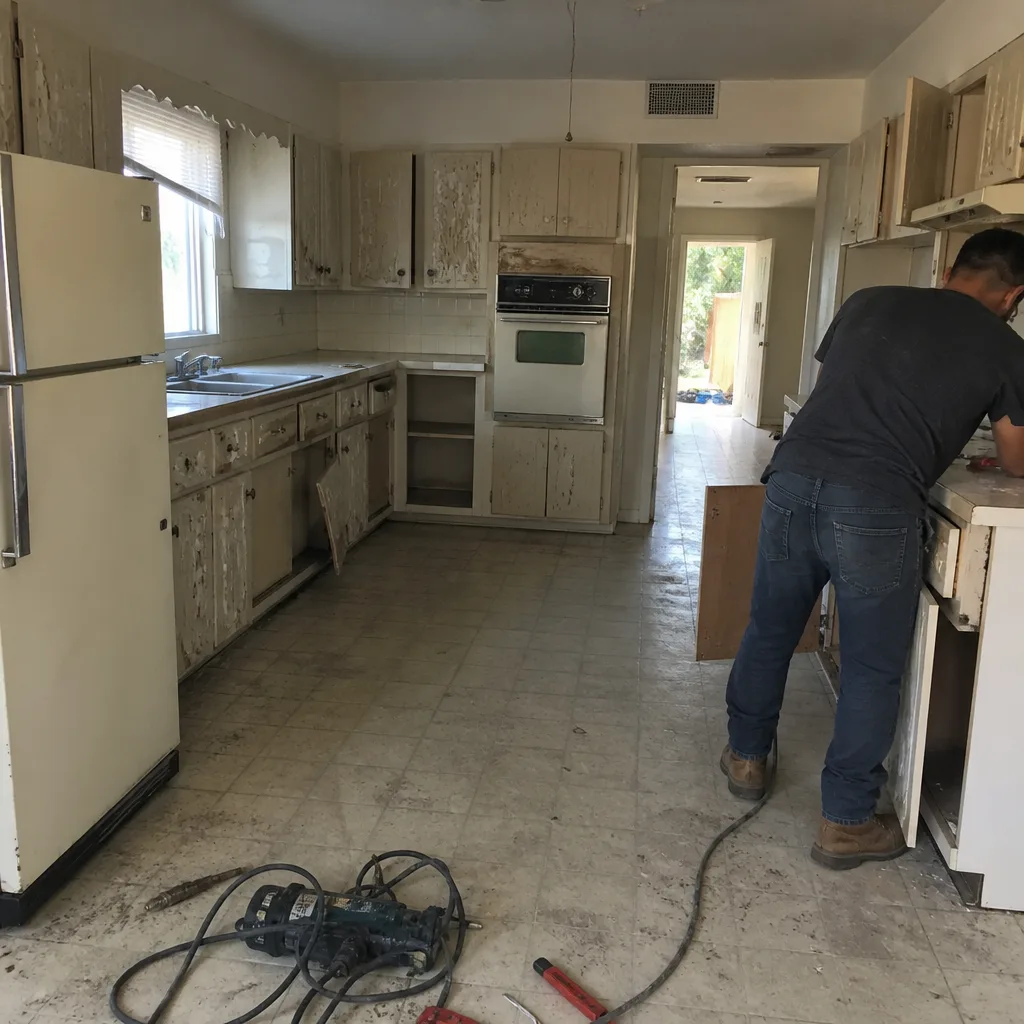 Before
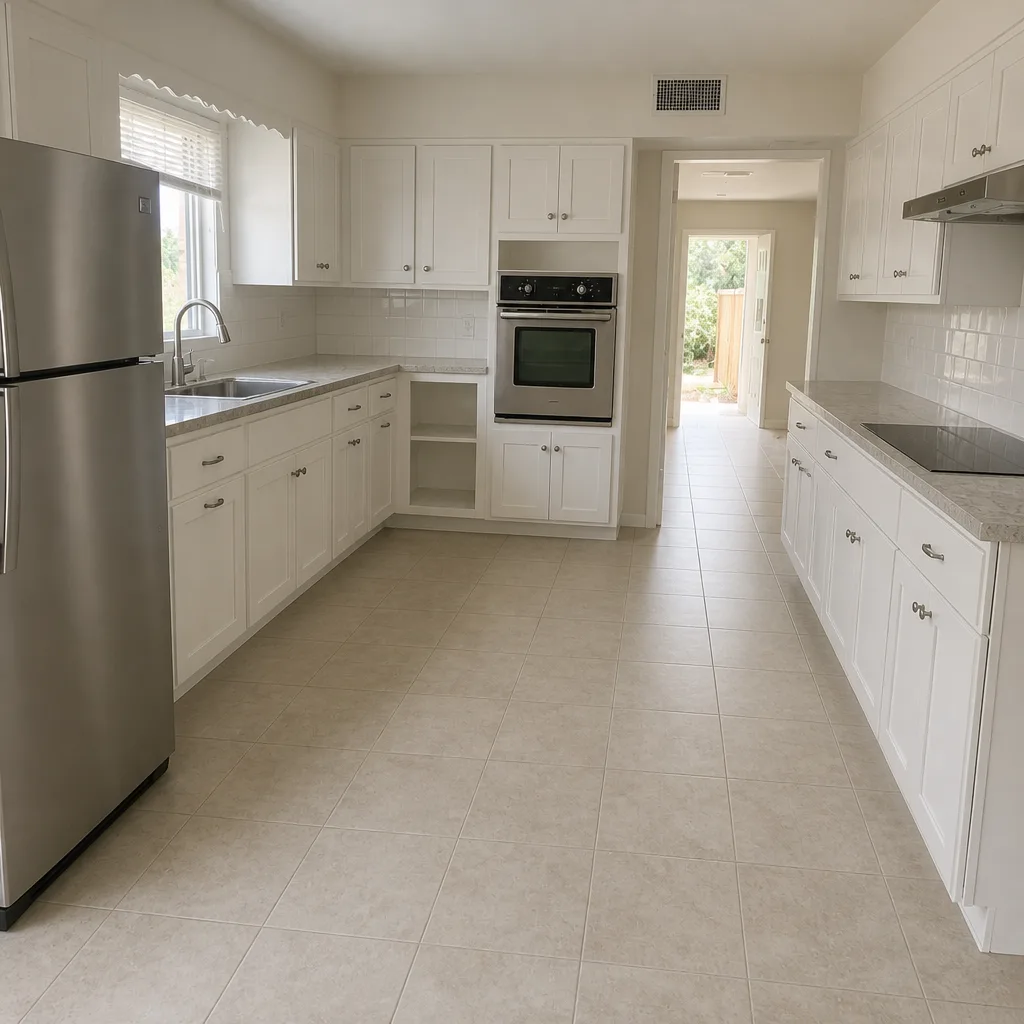 After
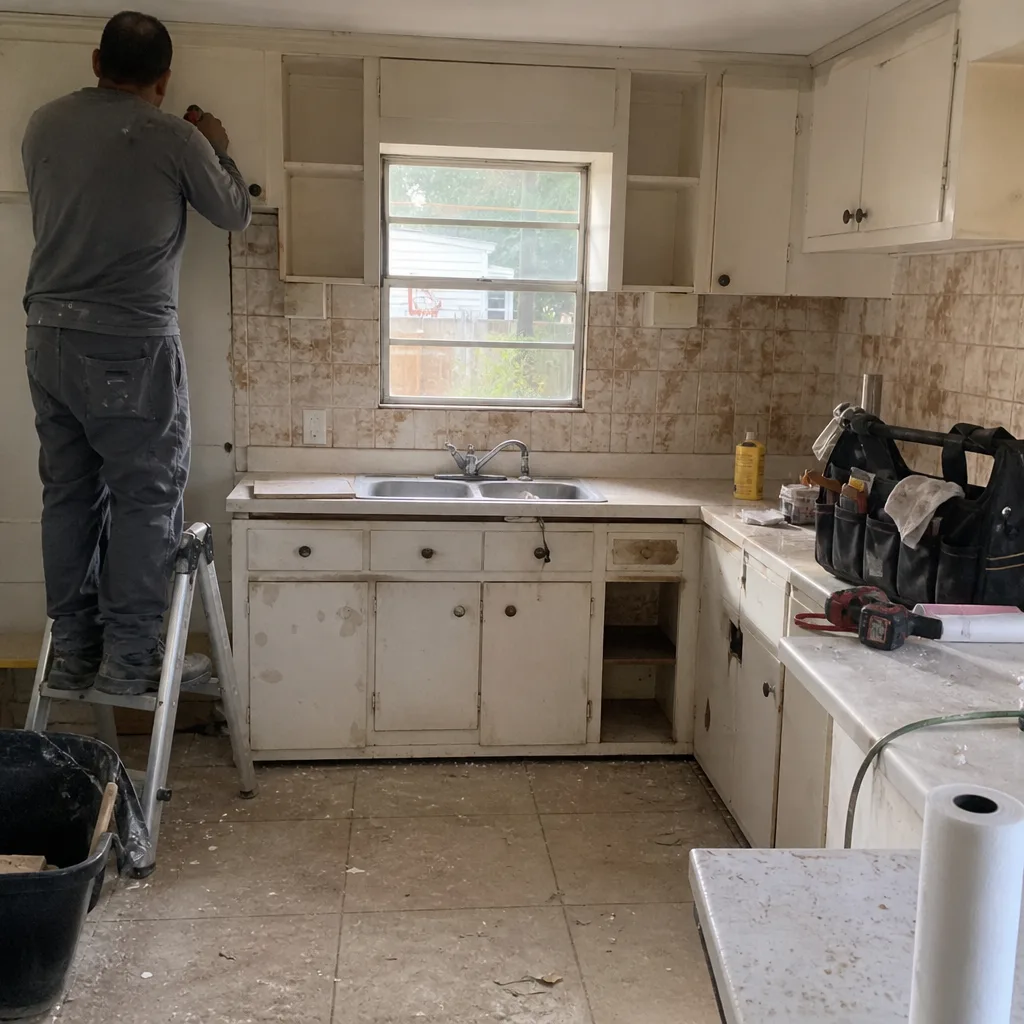 Before
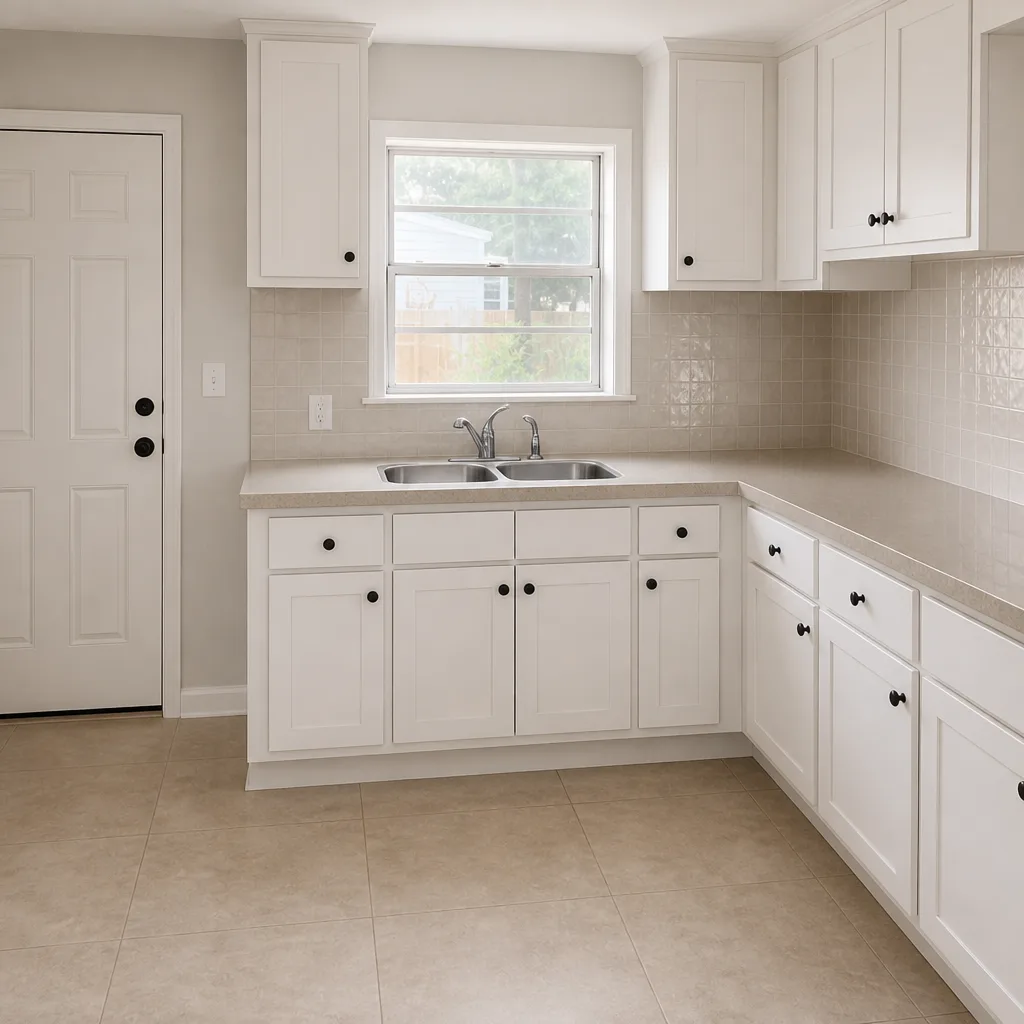 After
After a Storm: What to Document Before You Touch Anything

The instinct after a storm is to grab a broom and start cleaning. Don’t – not until you’ve documented what damage exists. Insurance adjusters in North Miami see the same pattern every season: homeowners clean up the visible mess, and by the time the adjuster arrives, the evidence of storm damage is gone. Documentation first, then cleanup.
Here’s the sequence we recommend to every homeowner who calls us after a storm:
- Photograph and video everything before moving anything. Every crack, every water stain, every damaged shingle. Include wide shots and close-ups. Timestamp photos help.
- Note the water intrusion points. If water came in, photograph where. The location matters for the claim.
- Do not sign anything from a door-to-door contractor. Ever. Especially “assignment of benefits” paperwork, which signs your insurance rights over to them.
- Do not accept “quick fixes.” Tarping and temporary sealing are fine. But be wary of contractors offering full repairs on the spot before an adjuster has seen the damage – it can complicate your claim substantially.
- Call your insurer before the “recommended contractor” arrives. The insurer will tell you what they need. A legitimate repair contractor will wait for that process.
In our experience, the “quick fixes” that cause the most trouble are roof patch jobs that don’t address the underlying deck, drywall painted over wet substrate, and window sealing done with caulk that can’t handle a Category storm. Each of those buys a month and costs you a full repair later. If someone knocks on your door in the week after a storm offering to “just seal it up,” take their card and call a licensed North Miami contractor instead.
The Inspections South Florida Homeowners Skip
Insurance adjusters look for these first after a loss, which is why skipping them costs money. Walk them every year – preferably in the fall, after hurricane season but before the dry window closes.
- Roof-to-wall attachment: can’t see it from the yard, but an adjuster checks it after any wind claim. If your roof was re-nailed to current code, keep the documentation.
- Impact glass labels: verify readable product labels on every opening. Faded or missing labels slow claims.
- Window flashing and sealant: the source of most leaks in wind-driven rain. Worth a check every year, not every five.
- Attic ventilation and moisture staining: evidence of pre-existing moisture problems gets used to reduce claims, so catch it before they do.
- Exterior doors and thresholds: wind gets under a poorly sealed door and out comes the frame.
- Garage door wind rating: verify the sticker. If it’s not rated for your zone, that’s the first thing an adjuster will check.
- Permit history: an unpermitted addition or enclosure will surface during a claim. Unlike most inspections, this one you want to know about now.
Most of these take an hour total. If you’re not sure what you’re looking at, that’s the point at which a licensed local professional pays for themselves.
Common Mistakes to Avoid
- Scheduling exterior work in the summer. Painting, stucco and waterproofing done between June and October in North Miami often fail within a year because the humidity prevents a proper cure. Schedule them in the dry window.
- Waiting until May to call for pre-season work. By then reputable North Miami contractors are booked. January and February calls get real attention; May calls get a waitlist.
- Cleaning storm damage before documenting it. Take the photos before you sweep. No adjuster will accept “the water came in here” without evidence.
- Trusting a verbal estimate for a storm repair. It’s the single most common reason homeowners get burned. Get a written scope and price before any repair begins.
- Ignoring humidity control during interior work. A flooring install done before proper acclimation, or drywall forced dry with heat guns, will fail by fall. It’s a scheduling mistake, not a materials problem.
- Signing an assignment of benefits during storm season. A common scam in North Miami. Never sign one, even if the contractor’s pitch is convincing.
- Skipping the pre-loss inspections. Missing roof-to-wall documentation, faded impact labels or an unpermitted addition will surface during a claim and reduce your settlement.
When to Call a Professional
Some seasonal care you can do yourself – clearing gutters, checking door seals. Others need a licensed professional. Call us if any of the following is true: your roof is more than 15 years old and you haven’t had it inspected; you’re not sure whether your impact openings meet current code; you have standing water or stains in the attic; a bathroom or kitchen project has been delayed past its scheduled finish; or you’ve started a project and the humidity is causing issues you didn’t anticipate. If it’s storm damage, work with a licensed general contractor who puts the scope and price in writing before any restore work begins. If you’re in North Miami – or Serenity Ridge, Sun Valley, up into Pinecrest – Penhallow Remodeling North Miami home is where to start.
Penhallow Remodeling North Miami offers free estimates in North Miami. Call (888) 255-7411 to schedule yours.
Frequently Asked Questions
January through May. That gives a licensed inspector time to catch issues and lets exterior work cure in the dry season before the first named storm. Anything scheduled after May 31 in North Miami sits on a contractor’s waitlist through the summer, and exterior paint, stucco and waterproofing all cure poorly in the humid months. Call us at (888) 255-7411 for an exact quote – estimates are free.
Roughly $400 – $900 per year for a checked program of roof inspection, drainage clearing, impact-opening verification and exterior seal checks. That’s the price of catching one small leak before it becomes a $6,000 interior repair. Some homeowners do it themselves for $0, which works if they know what to look for. If they’re not sure what to look for, having a licensed pro do it once a year pays for itself. Call (888) 255-7411 for a quote.
Not on a project we quote. Our written price is the number on the invoice – not an estimate range, not a verbal ballpark. The only legitimate price changes are scope changes you request in writing. If a contractor hands you a range, ask what each line item covers and whether that number is fixed. Call (888) 255-7411 for a free estimate and a written quote.
Yes. Any work requiring a permit gets a permit pulled and passed inspection – that includes most roof repairs, impact window replacements, structural stucco repair and anything touching the building envelope. Unpermitted work turns into a real problem after a claim, because the adjuster will find it. Call (888) 255-7411 to discuss your project.
An interior kitchen or bathroom runs 3 – 6 weeks in North Miami, but the schedule depends on humidity control, not just labor hours. Flooring needs acclimation time (up to a week or more), drywall needs full drying between coats, and cabinets need the house conditioned during install. A crew that wants to compress the timeline is skipping something. Call (888) 255-7411 for a written scope and timeline.
Document before you touch anything. Photograph every crack, stain and shingle, note where water intruded, and don’t sign anything from a door-to-door contractor. Call your insurer before you authorize any repair, and be wary of “quick fixes” offered on the spot – they often delay the proper fix and complicate the claim. Call (888) 255-7411 if you need a licensed contractor to assess and price the repair.
The Bottom Line
North Miami’s two seasons set the construction calendar. Pre-season work – roof inspection, impact verification, drainage clearing, seal checges – belongs in the January-through-May window before hurricane season. Exterior paint, stucco and waterproofing belong in the dry season, November through April, because of cure times. Interior remodels can happen year-round, but only when humidity is planned for. After a storm, document before you touch anything, and refuse “quick fixes” and any assignment of benefits. Do these four things and you’ll spend the year maintaining your home rather than scrambling to repair it.
Penhallow Remodeling North Miami brings homeowners kitchen, bathroom and whole-home renovations with a written price before work starts, background-checked technicians in uniform and a 365-Day Done Right Promise on every project. Call (888) 255-7411 for a free estimate.
Written by the team at Penhallow Remodeling North Miami.